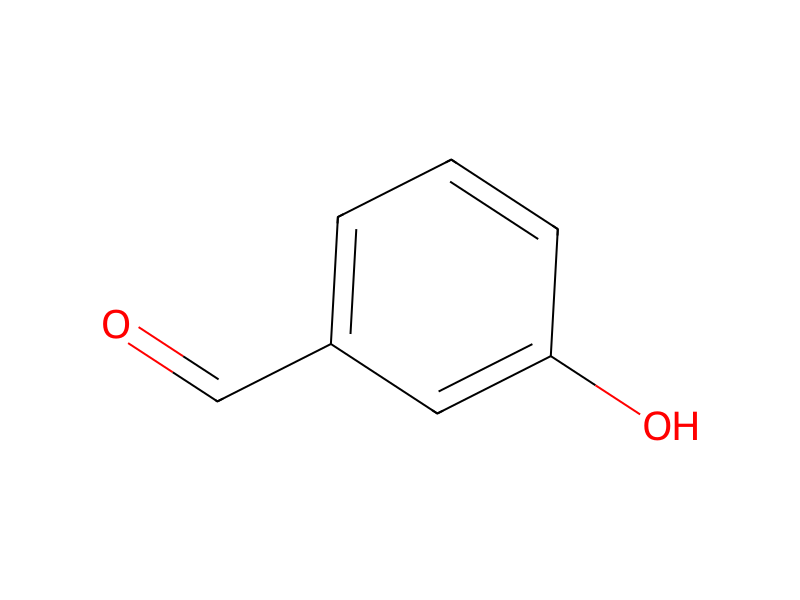
3-Hydroxybenzaldehyde → 1-(3-Hydroxybenzyl)piperidine
Reaction equation

OC1C=C(C=CC=1)C=O.[NH:10]1CC[CH2:13][CH2:12][CH2:11]1.[N:16]1([CH2:22][C:23]2[CH:24]=[C:25]([OH:29])[CH:26]=[CH:27][CH:28]=2)[CH2:21][CH2:20][CH2:19][CH2:18][CH2:17]1.ClCCCN>>[N:16]1([CH2:22][C:23]2[CH:24]=[C:25]([OH:29])[CH:26]=[CH:27][CH:28]=2)[CH2:21][CH2:20][CH2:19][CH2:18][CH2:17]1.[NH2:10][CH2:11][CH2:12][CH2:13][O:29][C:25]1[CH:24]=[C:23]([CH:28]=[CH:27][CH:26]=1)[CH2:22][N:16]1[CH2:21][CH2:20][CH2:19][CH2:18][CH2:17]1Participants
6



Procedure
First, 3-piperidinomethylphenol is synthesized from 3-hydroxybenzaldehyde and piperidine. The 3-piperidinomethylphenol is then reacted with 3-chloropropylamine to produce N-[3-(3-aminopropoxy)benzyl]piperidine, which is reacted with acetoxyacetyl chloride to obtain N-[3-(3-piperidinomethylphenoxy)propyl]hydroxyacetamide. Separately, tranexamic acid and carbobenzoxy chloride are reacted to produce N-carbobenzoxyaminomethylhexanecarboxy chloride. The two compounds thus obtained are then reacted first to afford N-{3-[3-(1-piperidinomethyl)phenoxy]propyl}-2-(N-carbobenzoxy-aminomethylhexanecarboxy)acetamide. This compound is then reduced into 2-(aminomethylcyclohexanecarboxy)-N-(3-[3-(piperidinomethyl)phenoxy]propyl}acetamide.
Sources & evidence
- ORD record
- ord-1fddb10054574a4da076e9ce0674417e
- Source dataset
- uspto-grants-1994_05
- Patent number
- US05317026
Reaction notes
Loading…