Lithium Hydroxide → HCID 59443455, compound
Reaction equation

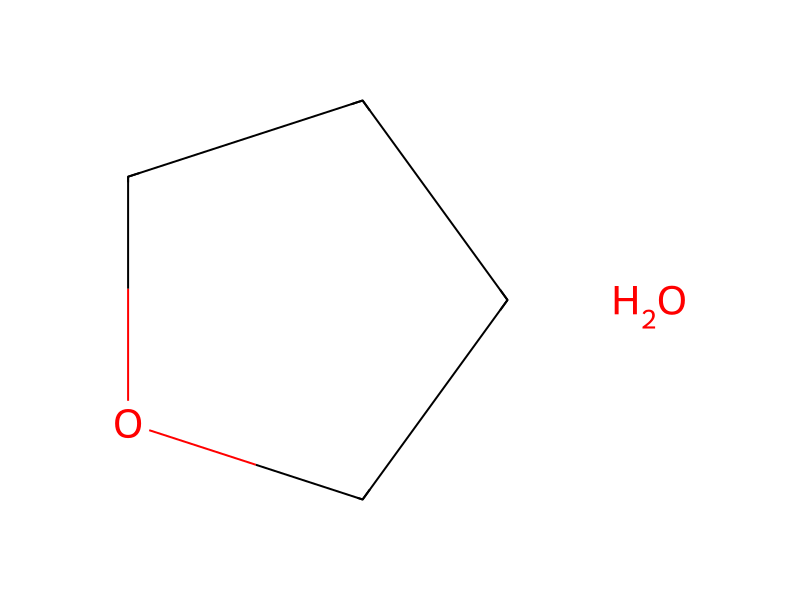
[OH-].[Li+].C([O:5][C:6](=[O:29])/[CH:7]=[CH:8]/[C:9]1[C:18]2[C:13](=[CH:14][C:15]([C:19]3[CH:24]=[CH:23][CH:22]=[C:21]([O:25][CH3:26])[CH:20]=3)=[CH:16][CH:17]=2)[CH:12]=[CH:11][C:10]=1[O:27][CH3:28])C>C1COCC1.O>[CH3:28][O:27][C:10]1[CH:11]=[CH:12][C:13]2[C:18](=[CH:17][CH:16]=[C:15]([C:19]3[CH:24]=[CH:23][CH:22]=[C:21]([O:25][CH3:26])[CH:20]=3)[CH:14]=2)[C:9]=1/[CH:8]=[CH:7]/[C:6]([OH:29])=[O:5]Participants
4
Reactant 2


Product 1

Reagents, catalysts & solvents 1
Procedure
Lithium hydroxide (407.7 mg, 9.94 mmol, 6 eq) is added to a solution, cooled at 0° C., of (E)-3-(2-methoxy-6-(3-methoxyphenyl)naphthalene-1-yl)acrylic acid ethyl ester (600 mg, 1.66 mmol, 1 eq) in a mixture of THF/water 3/1 (20 ml), and the reaction mixture is boiled under reflux over night. The solvent is removed in vacuum on a rotary evaporator, and 2 N HCl is added to the residue. This phase is extracted with dichloromethane. The combined organic phases are dried over magnesium sulfate, filtered and concentrated in vacuum on a rotary evaporator. The residual solid is the desired product (quantitative yield, 554 mg).
Workup
- temperatureunder reflux over night
- customThe solvent is removed in vacuum on a rotary evaporator, and 2 N HCl
- additionis added to the residue
- extractionThis phase is extracted with dichloromethane
- dry with materialThe combined organic phases are dried over magnesium sulfate
- filtrationfiltered
- concentrationconcentrated in vacuum on a rotary evaporator
Sources & evidence
- ORD record
- ord-fb9b9d870c394061a08b1e87220e8c5a
- Source dataset
- uspto-grants-2013_10
- Patent number
- US08546392B2
Reaction notes
Loading…