Diisopropylethylamine → HCID 57632407, compound
Reaction equation

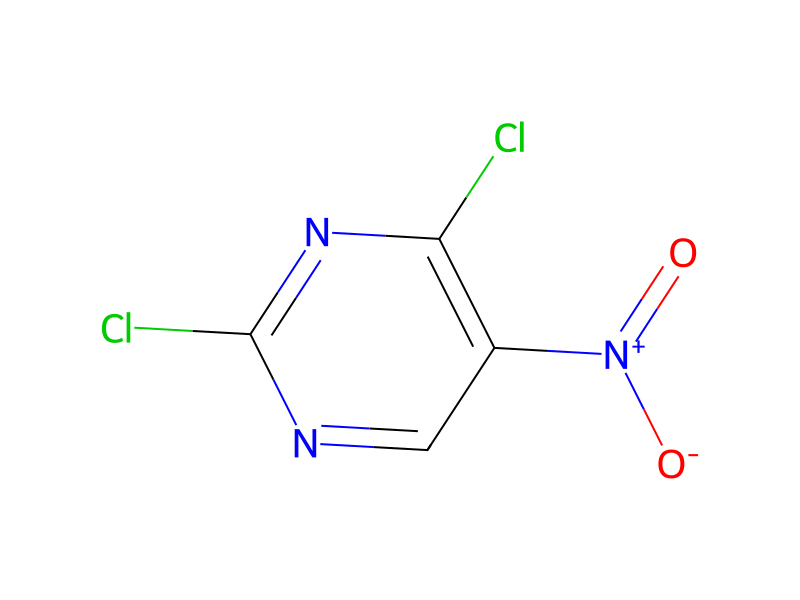
[Cl:1][C:2]1[N:7]=[CH:6][C:5]([N+:8]([O-:10])=[O:9])=[C:4](Cl)[N:3]=1.[NH2:12][C:13]1[CH:22]=[CH:21][CH:20]=[CH:19][C:14]=1[C:15]([NH:17][CH3:18])=[O:16].C(N(CC)C(C)C)(C)C>C(OCC)C>[Cl:1][C:2]1[N:3]=[C:4]([NH:12][C:13]2[CH:22]=[CH:21][CH:20]=[CH:19][C:14]=2[C:15]([NH:17][CH3:18])=[O:16])[C:5]([N+:8]([O-:10])=[O:9])=[CH:6][N:7]=1Participants
5
Reactant 3


Product 1

Reagents, catalysts & solvents 1

Procedure
In a similar fashion as outlined in Example 191a, 2,6-dichloro-5-nitropyrimidine was reacted with 2-amino-N-methylbenzamide and N,N-diisopropylethylamine in ethyl ether (no microwave −20° C., 3 hours) to afford 2-(2-chloro-5-nitro-pyrimidin-4-ylamino)-N-methyl-benzamide as a yellow solid in 49% yield. Mp: 201-3° C. (dec); MS: 308.09 (M+H); 1H NMR (d6-dmso): δ 12.43 (s, 1H), δ 9.20 (s, 1H), δ 8.75 (br s, 1H), δ 8.19 (d, J=9 Hz, 1H), δ 7.71 (d, J=8 Hz, 1H), δ 7.58 (t, J=8 Hz, 1H), δ 7.33 (t, J=8 Hz, 1H), δ 2.78 (d, J=5 Hz, 3H).
Sources & evidence
- ORD record
- ord-a82b8975d87d450d8a2afce285ebd5f8
- Source dataset
- uspto-grants-2013_10
- Patent number
- US08552186B2
Reaction notes
Loading…