Tetrahydrofuran → HCID 178519734, compound
Reaction equation

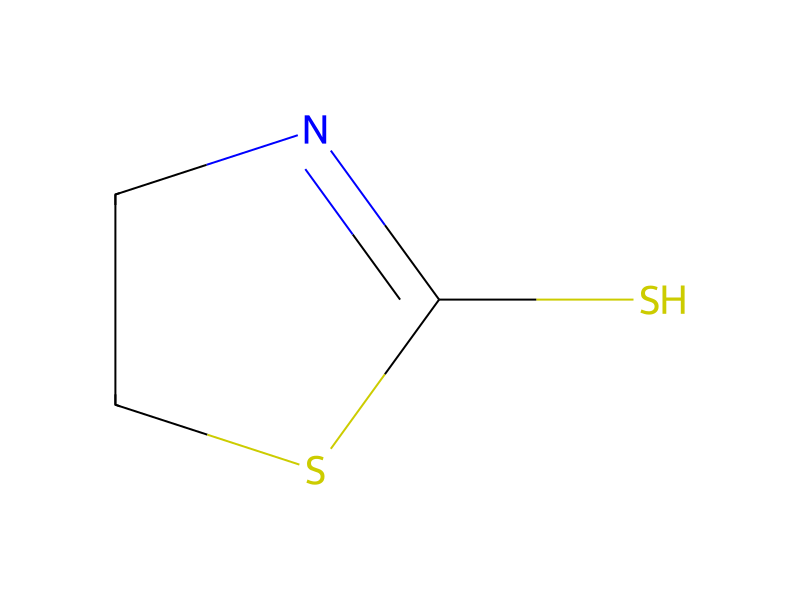
[CH2:1]([O:8][N:9]1[C:14](C(O)=O)=[CH:13][CH:12]=[CH:11][C:10]1=[O:18])[C:2]1[CH:7]=[CH:6][CH:5]=[CH:4][CH:3]=1.[SH:19][C:20]1[S:21][CH2:22][CH2:23][N:24]=1.C1(N=C=NC2CCCCC2)CCCCC1.C1C[O:43][CH2:42]C1>>[CH2:1]([O:8][N:9]1[C:14]([SH:21]2[CH2:22][CH2:23][NH:24][C:20]2=[S:19])=[CH:13][CH2:12][C:11](=[C:42]=[O:43])[C:10]1=[O:18])[C:2]1[CH:3]=[CH:4][CH:5]=[CH:6][CH:7]=1Participants
5




Procedure
To a solution of 1-benzyloxy-6-carboxy-2 (1H)-pyridinone (4.90 g, 20 mmol), 2-mercaptothiazoline (2.62 g, 22 mmol), and a catalytic amount of 4-dimethyl-aminopyridine (DMAP) in dry THF (50 mL), was added N,N′-dicyclohexylcarbodiimide (DCC) (4.6 g, 22 mmol). After stirring overnight, the dicyclohexylurea (DCU) solids are removed by filtration the yellow filtrate is removed by rotary evaporation to give a yellow solid. Crystallization from isopropanol-methylene chloride gives the title compound (5.80 g, 83.7%) as a pale yellow powder, m.p.: 135-7° C.
Workup
- customthe dicyclohexylurea (DCU) solids are removed by filtration the yellow filtrate
- customis removed by rotary evaporation
- customto give a yellow solid
- customCrystallization from isopropanol-methylene chloride
Sources & evidence
- ORD record
- ord-37b0709f14574092ad760bcf8171185e
- Source dataset
- uspto-grants-2013_10
- Patent number
- US08557601B2
Reaction notes
Loading…