Dichloromethane → 4,4-Difluoro-L-proline methyl ester trifluoroacetate
Reaction equation

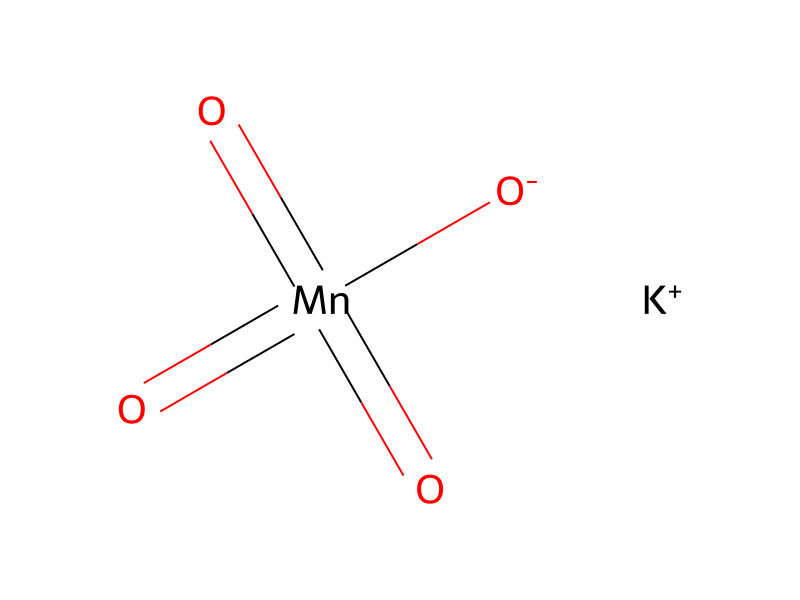
[F:1][C:2]1([F:18])[CH2:6][N:5](C(OC(C)(C)C)=O)[C@@H:4]([C:14]([O:16][CH3:17])=[O:15])[CH2:3]1.C(Cl)Cl.[F:22][C:23]([F:28])([F:27])[C:24]([OH:26])=[O:25].[O-][Mn](=O)(=O)=O.[K+]>CCOC(C)=O>[OH:26][C:24]([C:23]([F:28])([F:27])[F:22])=[O:25].[CH3:17][O:16][C:14]([C@@H:4]1[CH2:3][C:2]([F:18])([F:1])[CH2:6][NH:5]1)=[O:15]Participants
6
Reactant 4



Product 1

Reagents, catalysts & solvents 1

Procedure
A round-bottom flask was charged with (R)-1-tert-butyl 2-methyl 4,4-difluoropyrrolidine-1,2-dicarboxylate (675 mg, 2545 μmol), 10.2 mL DCM and trifluoroacetic acid (980 μl, 12724 μmol). The mixture was stirred at RT. After 6 h, TLC (50% hex/EtOAc, KMnO4 stain) indicated complete conversion. The mixture was concentrated, and the crude (5)-methyl-4,4-difluoropyrrolidine-2-carboxylate TFA salt was use as is.
Workup
- concentrationThe mixture was concentrated
Sources & evidence
- ORD record
- ord-7da5102621bb429cbbeab98ab3b8e92f
- Source dataset
- uspto-grants-2013_10
- Patent number
- US08557816B2
Reaction notes
Loading…