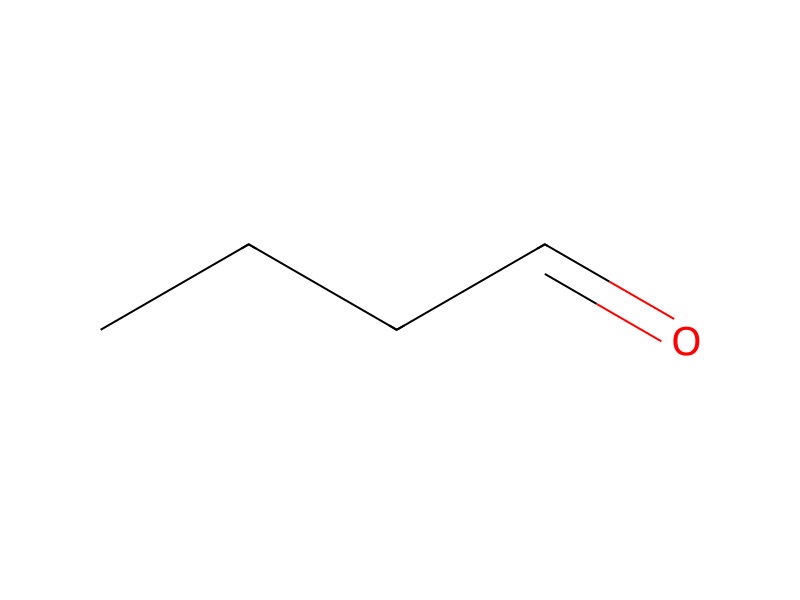
Butanal → HCID 86631204, compound
Reaction equation

[CH:1]1([NH:7][C:8]2[CH:13]=[CH:12][CH:11]=[C:10]([NH:14][CH:15]3[CH2:20][CH2:19][CH2:18][CH2:17][CH2:16]3)[CH:9]=2)[CH2:6][CH2:5][CH2:4][CH2:3][CH2:2]1.[CH:21](=O)[CH2:22][CH2:23][CH3:24].[H][H]>[Pt]>[CH:15]1([NH:14][C:10]2[CH:11]=[CH:12][C:13]([CH2:21][CH2:22][CH2:23][CH3:24])=[C:8]([NH:7][CH:1]3[CH2:6][CH2:5][CH2:4][CH2:3][CH2:2]3)[CH:9]=2)[CH2:20][CH2:19][CH2:18][CH2:17][CH2:16]1Participants
5
Reactant 3


Product 1

Reagents, catalysts & solvents 1

Conditions
- Temperature
- 180 °C
Procedure
To 263.1 g of N1,N3-dicyclohexyl-1,3-benzenediamine prepared as described in Example 2 were added 59.5 g butyraldehyde, and 2.0 g wet (as received) sulfided platinum on carbon catalyst. The autoclave was pressurized with 4,647 KPa (660 psig) of hydrogen. The reaction was heated to 180° C. over 4 hours, and held at for 180° C. 17 hours. The reaction mass was cooled and filtered, and volatiles were removed by rotary evaporation. The reaction mass was contained and the N1,N3-dicyclohexyl-4-butyl-1,3-benzenediamine was isolated by column chromatography as an oil, 93.5% pure by GCMS analysis. It has the characteristics reported below.
Workup
- customheld at for 180° C
- custom17 hours
- temperatureThe reaction mass was cooled
- filtrationfiltered
- customvolatiles were removed by rotary evaporation
Sources & evidence
- ORD record
- ord-165eada82c884656a0b64e5feb13cef3
- Source dataset
- uspto-grants-2013_10
- Patent number
- US08563489B2
Reaction notes
Loading…