Ammonium Chloride → 2-Chloro-4-morpholinopyrido[3,2-d]pyrimidine-6-carboxamide
Reaction equation

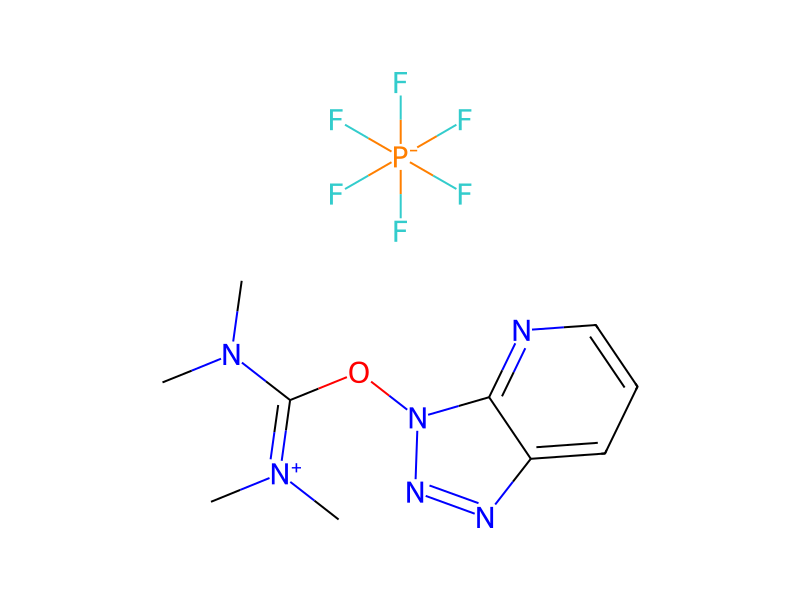
[Cl:1][C:2]1[N:3]=[C:4]([N:15]2[CH2:20][CH2:19][O:18][CH2:17][CH2:16]2)[C:5]2[N:11]=[C:10]([C:12](O)=[O:13])[CH:9]=[CH:8][C:6]=2[N:7]=1.[Cl-].[NH4+].C[N:24](C(ON1N=NC2C=CC=NC1=2)=[N+](C)C)C.F[P-](F)(F)(F)(F)F.CCN(C(C)C)C(C)C>CN(C=O)C.O>[Cl:1][C:2]1[N:3]=[C:4]([N:15]2[CH2:20][CH2:19][O:18][CH2:17][CH2:16]2)[C:5]2[N:11]=[C:10]([C:12]([NH2:24])=[O:13])[CH:9]=[CH:8][C:6]=2[N:7]=1Participants
7
Reactant 4



Product 1

Reagents, catalysts & solvents 2


Procedure
2-Chloro-4-morpholinopyrido[3,2-d]pyrimidine-6-carboxylic acid from Example 118 (0.12 g) was reacted with ammonium chloride (7 eq), HATU (1.5 eq) and DIPEA (4 eq) in DMF (5.2 mL) for 30 minutes. The reaction mixture was then diluted with water and the orange solid was collected by filtration to give 90 mg of 2-chloro-4-morpholinopyrido[3,2-d]pyrimidine-6-carboxamide.
Workup
- filtrationthe orange solid was collected by filtration
Sources & evidence
- ORD record
- ord-e5c214ab3fff4b8ca17d5e24c8ce133b
- Source dataset
- uspto-grants-2013_10
- Patent number
- US08563540B2
Reaction notes
Loading…