Diisopropylethylamine → HCID 58446994, compound
Reaction equation

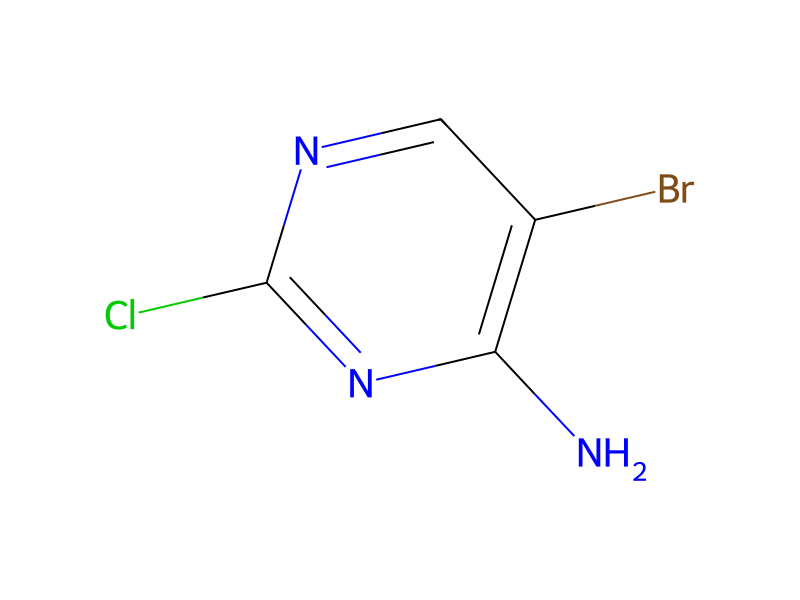
[Br:1][C:2]1[C:3]([NH2:9])=[N:4][C:5](Cl)=[N:6][CH:7]=1.C(N(CC)C(C)C)(C)C.[N:19]1([C:25]([O:27][C:28]([CH3:31])([CH3:30])[CH3:29])=[O:26])[CH2:24][CH2:23][NH:22][CH2:21][CH2:20]1>>[NH2:9][C:3]1[C:2]([Br:1])=[CH:7][N:6]=[C:5]([N:22]2[CH2:21][CH2:20][N:19]([C:25]([O:27][C:28]([CH3:31])([CH3:30])[CH3:29])=[O:26])[CH2:24][CH2:23]2)[N:4]=1Participants
4



Procedure
A 100 mL round bottom flask was charged with 5-bromo-2-chloropyrimidin-4-amine (8.0 g, 40 mmol), N,N-diisopropylethylamine (16.0 g, 120 mmol) and tert-butyl piperazine-1-carboxylate (11.0 g, 60 mmol). The resulting mixture was heated at reflux overnight. Work-up: the solvent was evaporated. The residue was re-crystallized from ethanol to afford 9.0 g (65%) of the product as a white solid. MS m/z: 358 (M+H+).
Workup
- temperatureThe resulting mixture was heated
- temperatureat reflux overnight
- customthe solvent was evaporated
- customThe residue was re-crystallized from ethanol
Sources & evidence
- ORD record
- ord-39fe9898aa5b4354b33613d0506b52f7
- Source dataset
- uspto-grants-2013_10
- Patent number
- US08569300B2
Reaction notes
Loading…