Trifluoroacetic anhydride → HCID 118598963, compound
Reaction equation

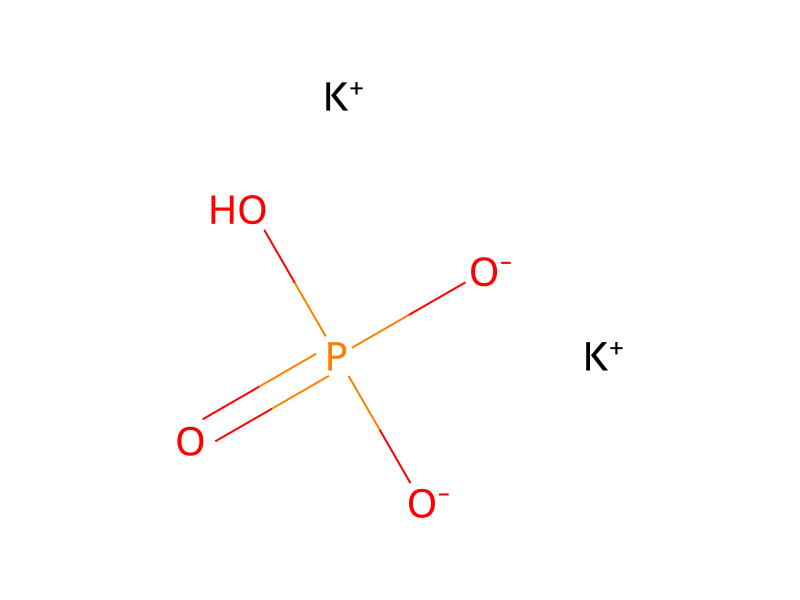
[Br:1][C:2]1[CH:3]=[C:4]([F:13])[C:5]([C:8]([O:10][CH2:11][CH3:12])=[O:9])=[N:6][CH:7]=1.FC(F)(F)C(OC(=O)C(F)(F)F)=[O:17].OO.NC(N)=O.P([O-])([O-])(O)=O.[K+].[K+]>ClCCl>[Br:1][C:2]1[CH:3]=[C:4]([F:13])[C:5]([C:8]([O:10][CH2:11][CH3:12])=[O:9])=[N+:6]([O-:17])[CH:7]=1Participants




Procedure
To a stirred solution of ethyl 5-bromo-3-fluoro-pyridine-2-carboxylate (2, 0.9 g, 3.63 mmol) in dichloromethane (50 mL) at 0° C. was added trifluoroacetic anhydride (1.52 g, 7.26 mmol), urea hydrogen peroxide (0.72 g, 7.62 mmol). The reaction mixture was stirred at room temperature overnight. After the oxidation was complete the reaction mixture was neutralized with a dipotassium hydrogenphosphate solution and quenched with a sodium bisulfite solution. The product was extracted with dichloromethane (2×100 mL). The organic layers were separated, dried with magnesium sulfate, filtered and concentrated to dryness under vacuum to afford ethyl 5-bromo-3-fluoro-1-oxido-pyridin-1-ium-2-carboxylate (3) as an off-white solid. Yield: 0.9 g, 89%; MS (ESI) m/z 265.95 [M+1]+; 1H NMR (400 MHz, DMSO-d6) δ: 8.22 (s, 1H), 7.30-7.26 (m, 1H), 4.50 (q, J=7.2 Hz, 2H), 1.42 (t, J=7.2 Hz, 3H).
Workup
- customquenched with a sodium bisulfite solution
- extractionThe product was extracted with dichloromethane (2×100 mL)
- customThe organic layers were separated
- dry with materialdried with magnesium sulfate
- filtrationfiltered
- concentrationconcentrated to dryness under vacuum
Sources & evidence
- ORD record
- ord-148b259664e34aca9f91183b6799c361
- Source dataset
- uspto-grants-2016_07
- Patent number
- US09382248B2
Reaction notes
Loading…