Potassium Carbonate → HCID 4189043, compound
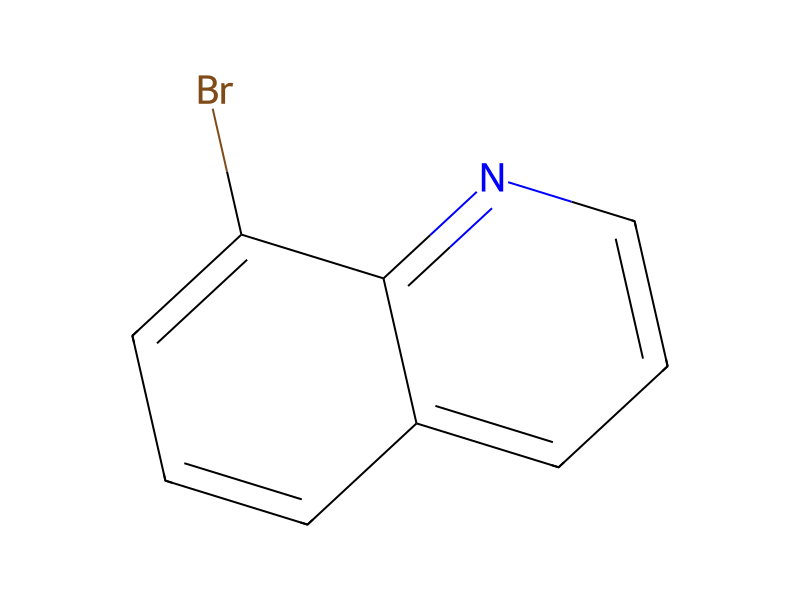
Reaction equation

Br[C:2]1[CH:3]=[CH:4][CH:5]=[C:6]2[C:11]=1[N:10]=[CH:9][CH:8]=[CH:7]2.[CH3:12][O:13][C:14]1[CH:15]=[C:16](B(O)O)[CH:17]=[CH:18][CH:19]=1.C([O-])([O-])=O.[K+].[K+]>O1CCOCC1.O.C1C=CC(P(C2C=CC=CC=2)[C-]2C=CC=C2)=CC=1.C1C=CC(P(C2C=CC=CC=2)[C-]2C=CC=C2)=CC=1.Cl[Pd]Cl.[Fe+2]>[CH3:12][O:13][C:14]1[CH:19]=[C:18]([C:2]2[CH:3]=[CH:4][CH:5]=[C:6]3[C:11]=2[N:10]=[CH:9][CH:8]=[CH:7]3)[CH:17]=[CH:16][CH:15]=1Participants
6
Reactant 3


Product 1

Reagents, catalysts & solvents 2


Conditions
- Temperature
- 120 °C
Procedure
To a solution of 8-bromoquinoline (208.05 mg, 1.0 mmol) in dioxane/H2O (10 mL) was added (3-methoxyphenyl)boronic acid (182.3 mg, 1.2 mmol), Pd(dppf)Cl2 (100 mg) and K2CO3 (276 mg, 2 mmol). The reaction mixture was heated at 120° C. under microwave conditions for 30 minutes before cooling and being concentrated to remove the solvents. The residue was dissolved in ethyl acetate, washed with water and the separated organic layer concentrated to yield a crude product which was used in next step without further purification. (312 mg, Yield 90%). LCMS (m/z): 236.1 (M+1).
Workup
- temperaturebefore cooling
- concentrationbeing concentrated
- customto remove the solvents
- dissolutionThe residue was dissolved in ethyl acetate
- washwashed with water
- concentrationthe separated organic layer concentrated
Sources & evidence
- ORD record
- ord-d68f34c0ee7d429f98744c28731b45ab
- Source dataset
- uspto-grants-2016_07
- Patent number
- US09388173B2
Reaction notes
Loading…