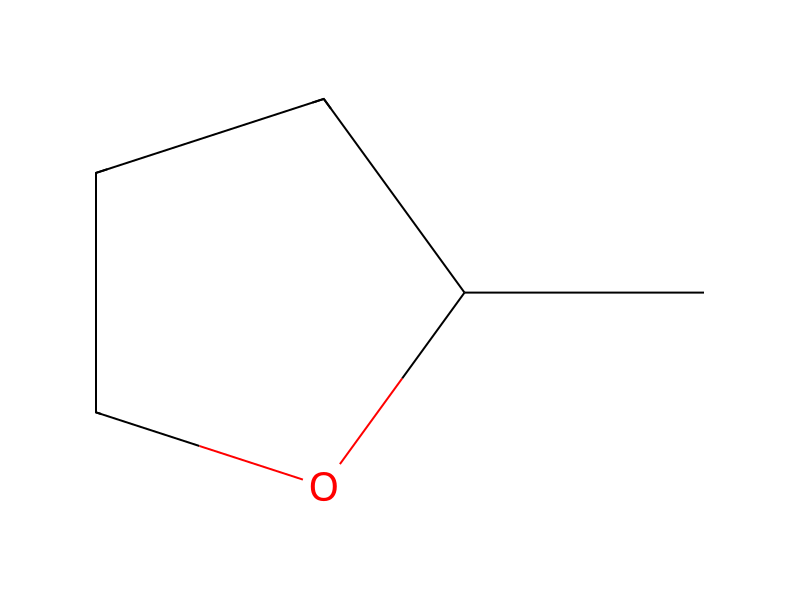
2-Methyltetrahydrofuran → HCID 90421710, compound
Reaction equation

Br[C:2]1[CH:3]=[CH:4][C:5]([N:10]([CH3:12])[CH3:11])=[N:6][C:7]=1[O:8][CH3:9].C([Li])CCC.CC1CCCO1.[CH3:24][O:25][C:26]([C:28]1[C:36]2[C:31](=[CH:32][C:33]([Cl:38])=[C:34](Br)[CH:35]=2)[N:30]([S:39]([C:42]2[CH:47]=[CH:46][C:45]([CH3:48])=[CH:44][CH:43]=2)(=[O:41])=[O:40])[CH:29]=1)=[O:27]>C1COCC1.CC(C)=O.[Cl-].[Cl-].[Zn+2]>[CH3:24][O:25][C:26]([C:28]1[C:36]2[C:31](=[CH:32][C:33]([Cl:38])=[C:34]([C:2]3[C:7]([O:8][CH3:9])=[N:6][C:5]([N:10]([CH3:12])[CH3:11])=[CH:4][CH:3]=3)[CH:35]=2)[N:30]([S:39]([C:42]2[CH:47]=[CH:46][C:45]([CH3:48])=[CH:44][CH:43]=2)(=[O:41])=[O:40])[CH:29]=1)=[O:27]Participants
Reactant 4



Product 1

Reagents, catalysts & solvents 3



Procedure
To a solution of Intermediate (5-bromo-6-methoxy-pyridin-2-yl)dimethyl-amine (78.8 g, 341 mmol) in THF (400 mL) at −70° C. was added a solution of n-butyllithium (2.5 M in hexanes, 127 mL, 317 mmol) dropwise, keeping the internal temperature below −60° C. The purple solution was stirred between −65° C. and −70° C. for 20 min. A solution of ZnCl2 in 2-methyltetrahydrofuran (1.9 M, 167 mL, 317 mmol) was added dropwise to the aryl lithium solution, keeping the internal temperature below −60° C. The resulting mixture was stirred between −65° C. and −70° C. for 20 min and then warmed to room temperature and stirred for 2 h, resulting in a clear pale yellow solution. The aryl zinc solution was then cannulated into a flask containing Intermediate 5-bromo-6-chloro-1-(toluene-4-sulfonyl)-1H-indole-3-carboxylic acid methyl ester (107.8 g, 244 mmol) and dichloro[bis(2-(diphenylphosphino)phenyl)ether]palladium(II) (8.72 g, 12.2 mmol) in THF (200 mL). The resulting mixture was stirred at room temperature for 2.5 h before quenching with sat. aq. NH4Cl (800 mL) and extracting with ethyl acetate (1500 mL). The aqueous layer was back extracted with ethyl acetate (750 mL) and the combined organics washed with brine (1000 mL), dried over MgSO4, filtered, and concentrated in vacuo. The residue was triturated with methanol (˜600 mL) and stirred overnight. The suspension was filtered to give a tan solid. This was dissolved in hot acetone (2 L) which was partially concentrated to ˜500 mL, then slowly cooled and stirred overnight. The resulting solid was filtered to yield one crop of desired product (109.1 g). The filtrate was also concentrated to a dark solid which was slurried in acetone, filtered, and the solid dissolved in hot acetone, which was then cooled to yield a second crop (3.3 g) of desired product as an off white solid. (90% total yield). 1H NMR (DMSO-d6, 400 MHz) δ=8.51 (s, 1H), 8.11 (d, J=8.6 Hz, 2H), 8.00 (s, 1H), 7.88 (s, 1H), 7.49 (d, J=8.2 Hz, 2H), 7.31 (d, J=8.2 Hz, 1H), 6.22 (d, J=8.2 Hz, 1H), 3.84 (s, 3H), 3.74 (s, 3H), 3.06 (s, 6H), 2.37 (s, 3H); MS (ES+) 514.2 (M+H)+.
Workup
- customthe internal temperature below −60° C
- customthe internal temperature below −60° C
- stirringThe resulting mixture was stirred between −65° C. and −70° C. for 20 min
- stirringstirred for 2 h
- customresulting in a clear pale yellow solution
- stirringThe resulting mixture was stirred at room temperature for 2.5 h
- custombefore quenching with sat. aq. NH4Cl (800 mL)
- extractionextracting with ethyl acetate (1500 mL)
- extractionThe aqueous layer was back extracted with ethyl acetate (750 mL)
- washthe combined organics washed with brine (1000 mL)
- dry with materialdried over MgSO4
- filtrationfiltered
- concentrationconcentrated in vacuo
- customThe residue was triturated with methanol (˜600 mL)
- stirringstirred overnight
- filtrationThe suspension was filtered
- customto give a tan solid
- concentrationwas partially concentrated to ˜500 mL
- temperatureslowly cooled
- stirringstirred overnight
- filtrationThe resulting solid was filtered
Sources & evidence
- ORD record
- ord-5ab84f886df644b780041845ef7aabb8
- Source dataset
- uspto-grants-2016_07
- Patent number
- US09394285B2
Reaction notes
Loading…