Potassium Carbonate → (9H-Carbazol-4-yloxy)acetonitrile
Reaction equation

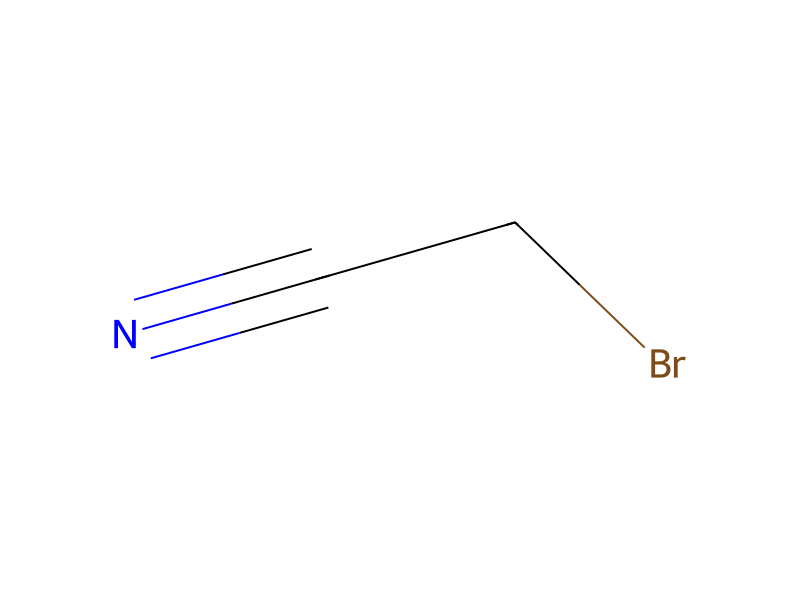
[CH:1]1[C:13]2[NH:12][C:11]3[C:6](=[CH:7][CH:8]=[CH:9][CH:10]=3)[C:5]=2[C:4]([OH:14])=[CH:3][CH:2]=1.C(=O)([O-])[O-].[K+].[K+].Br[CH2:22][C:23]#[N:24]>CN(C=O)C>[CH:1]1[C:13]2[NH:12][C:11]3[C:6](=[CH:7][CH:8]=[CH:9][CH:10]=3)[C:5]=2[C:4]([O:14][CH2:22][C:23]#[N:24])=[CH:3][CH:2]=1Participants
Reactant 3


Product 1

Reagents, catalysts & solvents 1

Procedure
A mixture of 9H-carbazol-4-ol (2.543 g, 0.014 mol), potassium carbonate (0.2.386 g, 0.017 mol), bromoacetonitrile (2.5 mL, 0.036 mol) and DMF (42 mL) is stirred at room temperature for 4 h. The mixture is then partitioned between water and ethyl acetate. The combined organic layers are dried over sodium sulfate and concentrated to a residue. The resulting residue is chromatographed on silica gel (200 mL) using ethyl acetate/hexane (20/80) to give 0.703 g (23%) of the title compound; mp 120-120.5° C.; MS (ESI−) for C14H10N2O m/z 221.0 (M−H)−; IR (drift) 3399, 1605, 1585, 1508, 1452, 1346, 1336, 1269, 1242, 1212, 1106, 785, 757, 750, 723 cm−1; 1H NMR (CDCl3) δ5.07, 6.76, 7.21, 7.29, 7.38-7.47, 8.18, 8.28. Anal. Calcd for C14H10N2O: C, 75.66; H, 4.53; N, 12.60. Found: C, 75.41; H, 4.52; N, 12.48.
Workup
- customThe mixture is then partitioned between water and ethyl acetate
- dry with materialThe combined organic layers are dried over sodium sulfate
- concentrationconcentrated to a residue
- customThe resulting residue is chromatographed on silica gel (200 mL)
Sources & evidence
- ORD record
- ord-f4e8cf3e332f43d0a0180fb3627a6545
- Source dataset
- uspto-grants-2003_02
- Patent number
- US06514968B1
Reaction notes
Loading…