Tetrahydrofuran → HCID 18668938, compound
Reaction equation

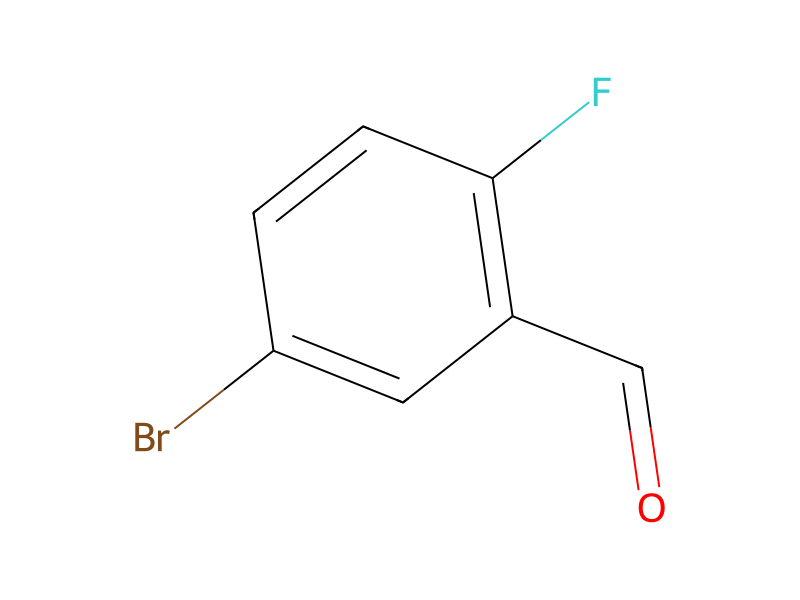
C1(P(C2C=CC=CC=2)C2C=CC=CC=2)C=CC=CC=1.Br[C:21]1[CH:22]=[CH:23][C:24]([F:29])=[C:25]([CH:28]=1)[CH:26]=[O:27].[O:30]1[CH2:34][CH2:33][CH2:32][CH2:31]1>C([Sn](CCCC)(CCCC)C1OC=CC=1)CCC>[F:29][C:24]1[CH:23]=[CH:22][C:21]([C:31]2[O:30][CH:34]=[CH:33][CH:32]=2)=[CH:28][C:25]=1[CH:26]=[O:27]Participants
5
Reactant 3


Product 1

Reagents, catalysts & solvents 1

Procedure
Tri(dibenzylideneacetone)-dipalladium (0.18 g, 0.2 mmol), and triphenylphosphine (0.21 g, 0.8 mmol) were dissolved in tetrahydrofuran (60 mL), followed by stirring at room temperature for 30 minutes. Then, 5-bromo-2-fluorobenzaldehyde (0.4 g, 2.0 mmol) and 2-(tributylstannyl)-furan (1.25 mL, 4. 0 mmol) were added thereto, followed by heating under reflux for 10 hours. The mixture was cooled to room temperature, and after the conventional treatment, the residue was purified by silica gel column chromatography (hexane: ethyl acetate=8:1), to give 2-fluoro-5-(2-furyl)benzaldehyde (0.38 g, 100%).
Workup
- temperatureby heating
- temperatureunder reflux for 10 hours
- temperatureThe mixture was cooled to room temperature
- customafter the conventional treatment, the residue was purified by silica gel column chromatography (hexane: ethyl acetate=8:1)
Sources & evidence
- ORD record
- ord-28c4b9b06f454fdcb5ebfd55dc21269e
- Source dataset
- uspto-grants-2003_02
- Patent number
- US06518268B1
Reaction notes
Loading…