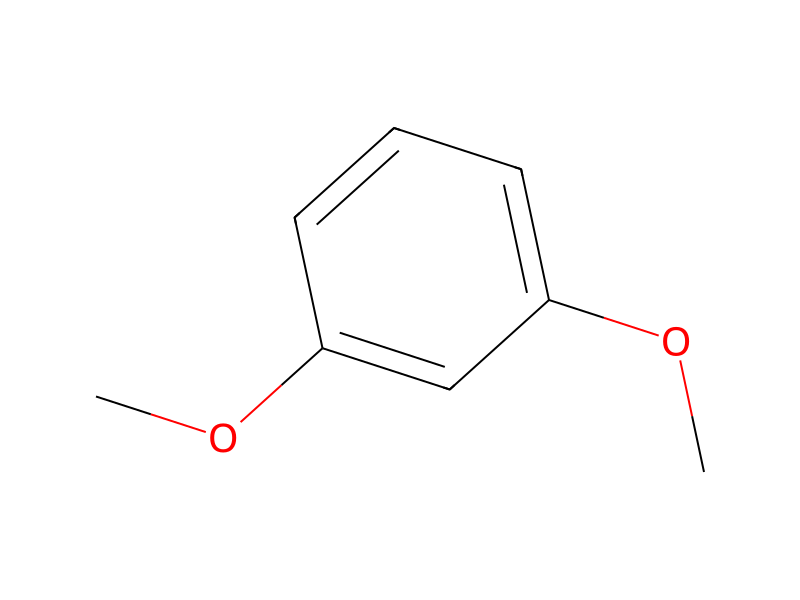
1,3-Dimethoxybenzene → Methyl 5-nitro-2-(2,6-dimethoxyphenyl)-benzoate
Reaction equation

[CH3:1][O:2][C:3]1[CH:8]=[CH:7][CH:6]=[C:5]([O:9][CH3:10])[CH:4]=1.[Li]CCCC.[CH3:16][O:17][C:18](=[O:29])[C:19]1[CH:24]=[C:23]([N+:25]([O-:27])=[O:26])[CH:22]=[CH:21][C:20]=1Br>C1COCC1.[Cl-].[Cl-].[Zn+2].C1C=CC(P(C2C=CC=CC=2)C2C=CC=CC=2)=CC=1.C1C=CC(P(C2C=CC=CC=2)C2C=CC=CC=2)=CC=1.Cl[Pd]Cl>[CH3:1][O:2][C:3]1[CH:8]=[CH:7][CH:6]=[C:5]([O:9][CH3:10])[C:4]=1[C:20]1[C:19]([C:18]([O:17][CH3:16])=[O:29])=[CH:24][C:23]([N+:25]([O-:27])=[O:26])=[CH:22][CH:21]=1Participants
Reactant 3


Product 1

Reagents, catalysts & solvents 3



Procedure
A solution of 1,3-dimethoxybenzene (115.2 ml, 0.88 mol) in anhydrous THF (600 ml) was cooled to 0° C. and treated with n-BuLi (382.4 ml, 0.95 mol, 2.5M solution in hexane) dropwise while maintaining the temperature of the reaction mixture between 0° C. and 5° C. The reaction mixture was allowed to warm to room temperature, stirred for 2 hours and recooled to 0° C. Anhydrous ZnCl2 (141.6 g, 1.04 mol) was added as a solid in portions while maintaining the reaction temperature below 5° C. After adding all the ZnCl2, the reaction mixture was allowed to warm to room temperature and stirred for 2 hours (clear solution). The reaction mixture was recooled to 0° C. and methyl-2-bromo-5-nitrobenzoate (208 g, 0.80 mol) was added as a solid in one portion, followed by the addition of dichloro-bis-(triphenylphosphine) palladium(II) (7 g, 9.90 mmol). Additional THF (200 ml) was added and the reaction mixture was allowed to warm to room temperature. Reaction is exothermic with exotherm starting around 20° C. The reaction mixture was stirred while maintaining the reaction temperature below 45° C. until methyl-2-bromo-5-nitrobenzoate was less than 0.1% peak area detected by HPLC. Solid product started precipitating out typically after 30 minutes. Isopropyl acetate (400 ml) was added and the reaction mixture was stirred for another 30 minutes. The solid was filtered and washed with isopropyl acetate (300 ml), dried at 40° C. under reduced pressure to provide the title compound (203 g, 80%). mp 157° C.; Anal. Calcd. for C16H15NO6: C, 60.57; H, 4.77; N, 4.41; Found C, 60.30; H, 4.76; N, 4.34. 1H NMR [(CD3)2SO] δ 3.65 (3H, s); 3.66 (6H, s), 6.73 (1H, s), 6.77 (1H, s), 7.36 (1H, m), 7.59 (1H, d), 8.36 (1H, dd) and 8.52 (1H, d); 13C [(CD3)2SO] δ 52.1, 104.2, 115.7, 123.7, 125.3, 130.1, 133.0, 134.4, 141.4, 146.0, 156.2, 165.6. The 13C signal for two methoxy groups at 55.6 are overlapping; IR (KBr): 1740 and 1600 cm−1; MS (APCI) m/z: 318 (M+H)+, m/z 335 (M+NH4)+, 340 (M+Na)+; FAB-HRMS: found, 318.0989, required 318.0978.
Workup
- temperaturewhile maintaining the temperature of the reaction mixture between 0° C. and 5° C
- customrecooled to 0° C
- temperaturewhile maintaining the reaction temperature below 5° C
- temperatureto warm to room temperature
- stirringstirred for 2 hours (clear solution)
- customwas recooled to 0° C.
- temperatureto warm to room temperature
- customReaction
- customwith exotherm starting around 20° C
- stirringThe reaction mixture was stirred
- customSolid product started precipitating out typically after 30 minutes
- additionIsopropyl acetate (400 ml) was added
- stirringthe reaction mixture was stirred for another 30 minutes
- filtrationThe solid was filtered
- washwashed with isopropyl acetate (300 ml)
- customdried at 40° C. under reduced pressure
Sources & evidence
- ORD record
- ord-eb526a6a0b9c4e4d8825cd2915a2de00
- Source dataset
- uspto-grants-2003_02
- Patent number
- US06518430B1
Reaction notes
Loading…