Ammonium Chloride → 1-vinyl-13-oxabicyclo[10.1.0]tridecane
Reaction equation

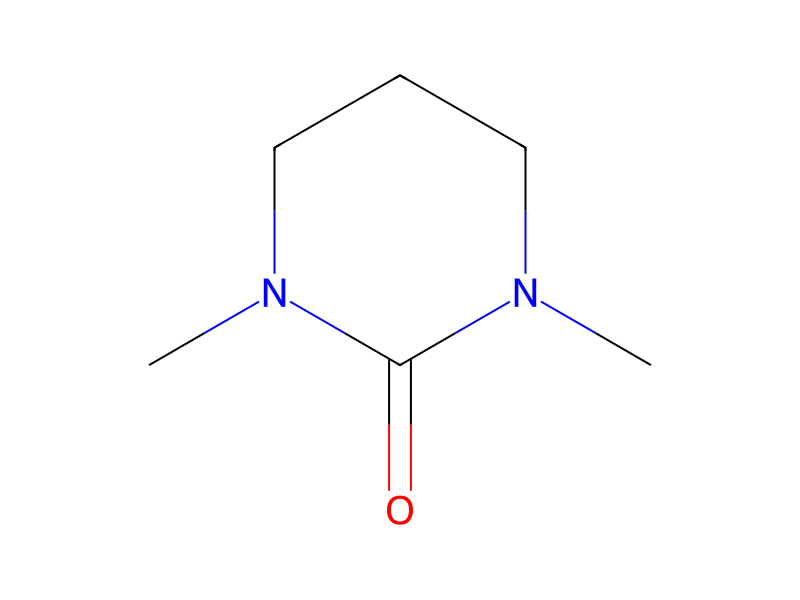
Cl[CH:2]1[CH2:13][CH2:12][CH2:11][CH2:10][CH2:9][CH2:8][CH2:7][CH2:6][CH2:5][CH2:4][C:3]1=[O:14].[CH:15]([Mg]Cl)=[CH2:16].CN1C(=O)N(C)CCC1.[Cl-].[NH4+]>C1COCC1>[CH:15]([C:4]12[O:14][CH:3]1[CH2:2][CH2:13][CH2:12][CH2:11][CH2:10][CH2:9][CH2:8][CH2:7][CH2:6][CH2:5]2)=[CH2:16]Participants




Conditions
- Temperature
- 50 °C
Procedure
A four-neck flask equipped with a thermometer, stirrer and condenser tube was charged with 100 g (0.46 mol) of 2-chlorocyclododecanone and 122 g of tetrahydrofuran, and at −10 to 0° C., a THF solution of vinylmagnesium chloride (0.82 mol) was added dropwise. The mixture was allowed to stand for reaction for 30 minutes, and 420 g (3.27 mol) of N,N′-dimethylpropyleneurea (DMPU) was added. The mixture was heated to 50° C. and allowed to stand for reaction for 1 hour, and saturated ammonium chloride aqueous solution was added dropwise for inactivation. The reaction mixture was subjected to extraction with hexane, and the solvent was recovered. The residue was distilled to obtain 1-vinyl-13-oxabicyclo[10.1.0]tridecane (80 g, 0.38 mol, chemical purity 98%, cis form:trans form=88:12). The yield was 82%.
Workup
- customA four-neck flask equipped with a thermometer, stirrer and condenser tube
- customto stand for reaction for 30 minutes
- customto stand for reaction for 1 hour
- extractionThe reaction mixture was subjected to extraction with hexane
- customthe solvent was recovered
- distillationThe residue was distilled
Sources & evidence
- ORD record
- ord-7a9a8a67641344f88f5dca5e0e08be22
- Source dataset
- uspto-grants-2003_02
- Patent number
- US06525207B1
Reaction notes
Loading…