N,N-Diethylaniline → HCID 22272849, compound
Reaction equation

[CH:1]([C:4]1[C:10]([F:11])=[CH:9][CH:8]=[C:7]([CH:12]([CH3:14])[CH3:13])[C:5]=1[NH2:6])([CH3:3])[CH3:2].C(N(CC)C1C=CC=CC=1)C.[Br:26][CH2:27][C:28](Br)=[O:29]>O>[Br:26][CH2:27][C:28]([NH:6][C:5]1[C:7]([CH:12]([CH3:14])[CH3:13])=[CH:8][CH:9]=[C:10]([F:11])[C:4]=1[CH:1]([CH3:3])[CH3:2])=[O:29]Participants
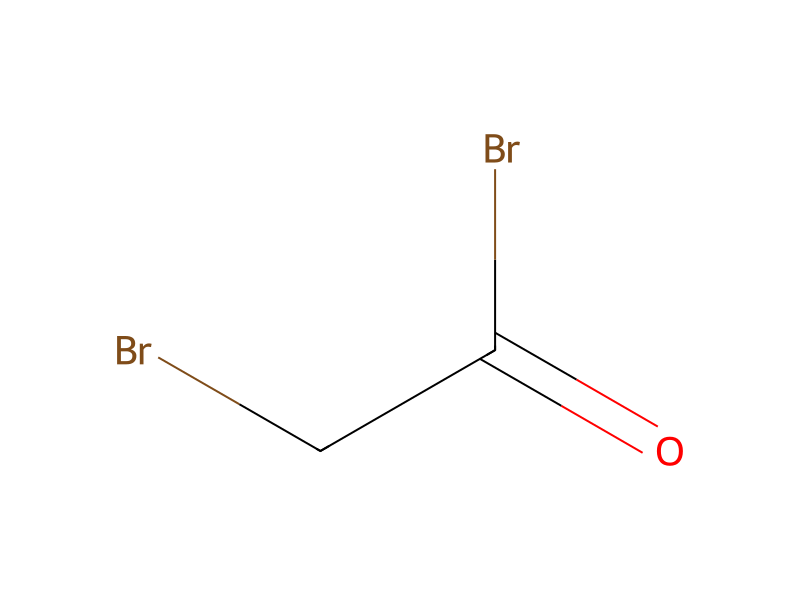
Reactant 3


Product 1

Reagents, catalysts & solvents 1

Procedure
To a solution of 2,6-diisopropyl-3-fluoroaniline (synthesized by the method described in the Japanese Patent Application Laid open No. Sho. 63-208556) (550 mg, 2.82 mmol) indichloromethane (20 ml) were added N,N-diethylaniline (478 mg, 3.94 mmol) and bromoacetyl bromide (649 mg, 3.22 mmol) successively with ice-cooling, and stirred at room temperature for 2 hours. The reaction solution was diluted with water and extracted with chloroform. The organic layer was washed with a saturated sodium chloride solution, dried over anhydrous sodium sulfate and concentrated in vacuo. The resulting residue was purified by a silica gel column chromatography (silica gel 50 g, developing solvent; hexane:ethyl acetate=7:1 3:1) to provide 730 mg (yield 82%) of 2-bromo-N-(2,6-diisopropyl-3-fluorophenyl)acetamide as colorless prisms.
Workup
- temperaturecooling
- extractionextracted with chloroform
- washThe organic layer was washed with a saturated sodium chloride solution
- dry with materialdried over anhydrous sodium sulfate
- concentrationconcentrated in vacuo
- customThe resulting residue was purified by a silica gel column chromatography (silica gel 50 g, developing solvent; hexane:ethyl acetate=7:1 3:1)
Sources & evidence
- ORD record
- ord-223ccf435a934f1b86e8870f8128d26f
- Source dataset
- uspto-grants-2005_11
- Patent number
- US06969711B2
Reaction notes
Loading…