Terazosin → Hydrochloric Acid
Reaction equation

[CH3:1][O:2][C:3]1[CH:4]=[C:5]2[C:14]([NH2:15])=[N:13][C:12]([N:16]3[CH2:21][CH2:20][N:19]([C:22]([CH:24]4[O:28][CH2:27][CH2:26][CH2:25]4)=[O:23])[CH2:18][CH2:17]3)=[N:11][C:6]2=[CH:7][C:8]=1[O:9][CH3:10].[ClH:29].O.O>O>[ClH:29].[CH3:1][O:2][C:3]1[CH:4]=[C:5]2[C:14]([NH2:15])=[N:13][C:12]([N:16]3[CH2:21][CH2:20][N:19]([C:22]([CH:24]4[O:28][CH2:27][CH2:26][CH2:25]4)=[O:23])[CH2:18][CH2:17]3)=[N:11][C:6]2=[CH:7][C:8]=1[O:9][CH3:10]Participants
5
Reactant 2
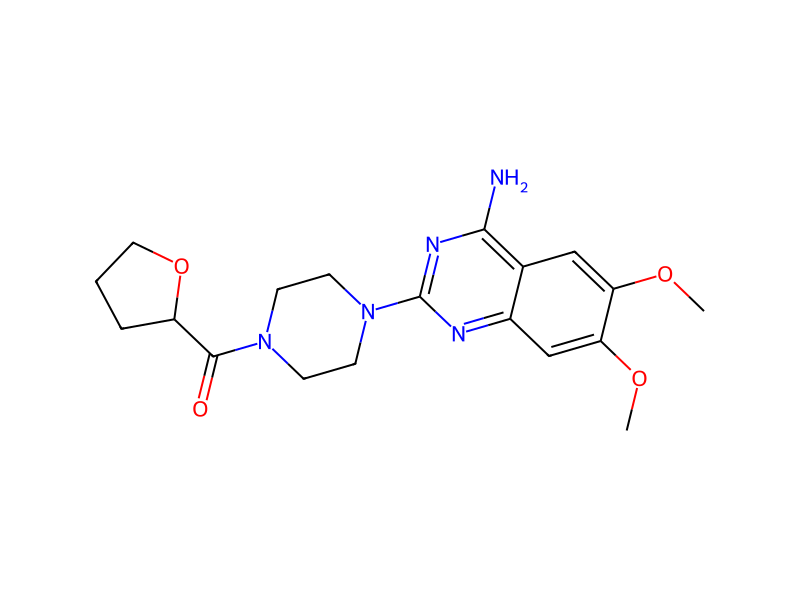

Product 2

Reagents, catalysts & solvents 1

Procedure
Canadian Pat. No. 2,150,985 describes a process for preparing Terazosin.HCl dihydrate which initially involves the preparation of terazosin free base. The free base form is then reacted by suspension in water and the addition thereto of a molar equivalent of aqueous hydrochloric acid to produce Terazosin.HCl dihydrate.
Workup
- additionthe addition
Sources & evidence
- ORD record
- ord-4ee48d99bfdb44748505e57ed57c063c
- Source dataset
- uspto-grants-2001_06
- Patent number
- US06248888B1
Reaction notes
Loading…