Water → HCID 18372479, compound
Reaction equation
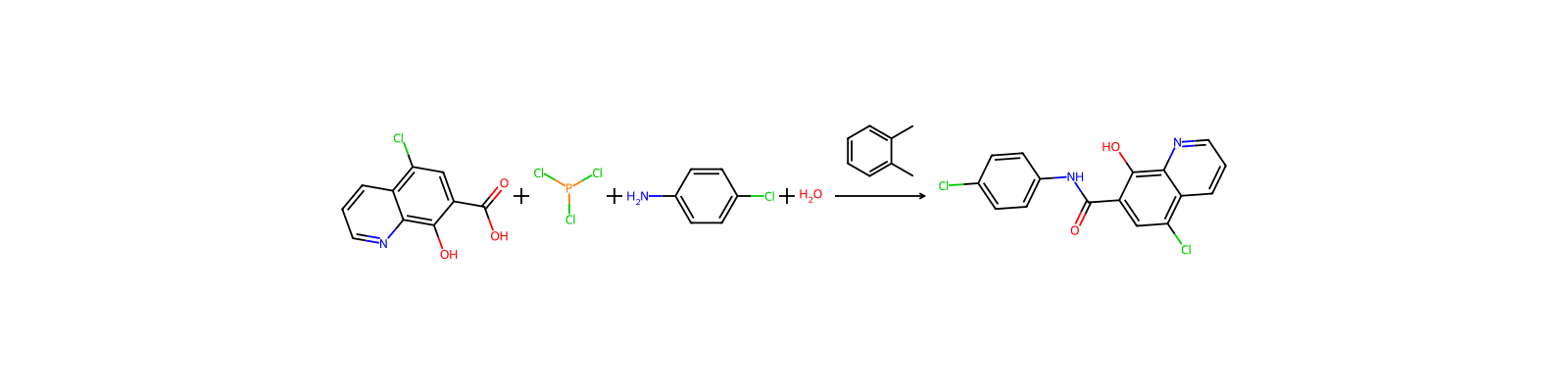
[Cl:1][C:2]1[CH:11]=[C:10]([C:12]([OH:14])=O)[C:9]([OH:15])=[C:8]2[C:3]=1[CH:4]=[CH:5][CH:6]=[N:7]2.P(Cl)(Cl)Cl.[Cl:20][C:21]1[CH:27]=[CH:26][C:24]([NH2:25])=[CH:23][CH:22]=1.O>C1(C)C(C)=CC=CC=1>[Cl:1][C:2]1[CH:11]=[C:10]([C:12]([NH:25][C:24]2[CH:26]=[CH:27][C:21]([Cl:20])=[CH:22][CH:23]=2)=[O:14])[C:9]([OH:15])=[C:8]2[C:3]=1[CH:4]=[CH:5][CH:6]=[N:7]2Participants
6
Reactant 4



Product 1

Reagents, catalysts & solvents 1

Procedure
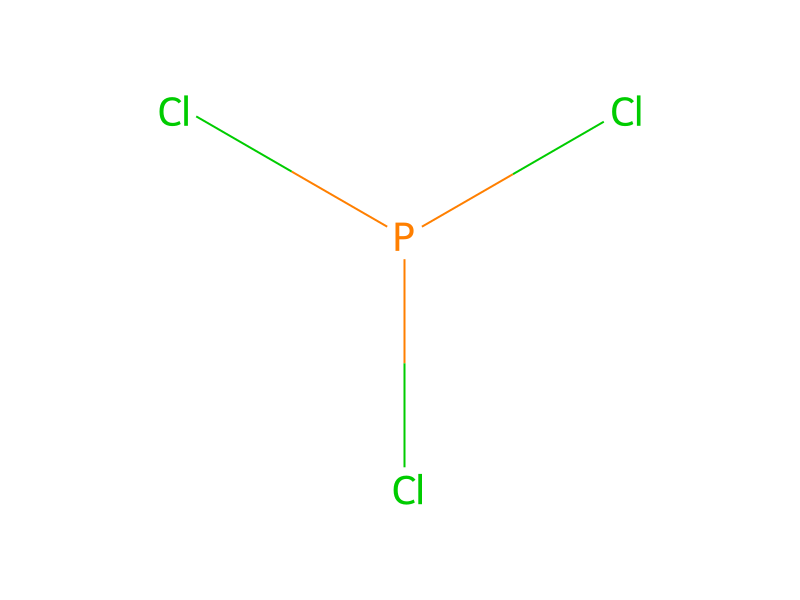
A suspension of 5-chloro-8-hydroxyquinoline-7-carboxylic acid (0.224 g) of Preparation 3 in 50 mL xylene is heated to reflux. To this is added dropwise PCl3 (0.069 g). After 15 min, 4-chloroaniline (0.128 g) is added. Refluxing is continued overnight. The reaction is then cooled and water is added to destroy excess PCl3. The resulting solid is collected, washed with water and dried. The solid is then partitioned between EtOAc and water. The aqueous layer is extracted with EtOAc (3×). The combined organic layers are washed with water, dried and condensed. The crude product is recrystallized from EtOAc to yield 0.073 g of the title product as an orange solid.
Workup
- temperatureis heated to reflux
- temperatureRefluxing
- waitis continued overnight
- temperatureThe reaction is then cooled
- customto destroy excess PCl3
- customThe resulting solid is collected
- washwashed with water
- customdried
- customThe solid is then partitioned between EtOAc and water
- extractionThe aqueous layer is extracted with EtOAc (3×)
- washThe combined organic layers are washed with water
- customdried
- customcondensed
- customThe crude product is recrystallized from EtOAc
Sources & evidence
- ORD record
- ord-2cea649fec3e4c6d88c874e634920dd0
- Source dataset
- uspto-grants-2001_06
- Patent number
- US06252080B1
Reaction notes
Loading…