Isopropanol → HCID 20798839, compound
Reaction equation

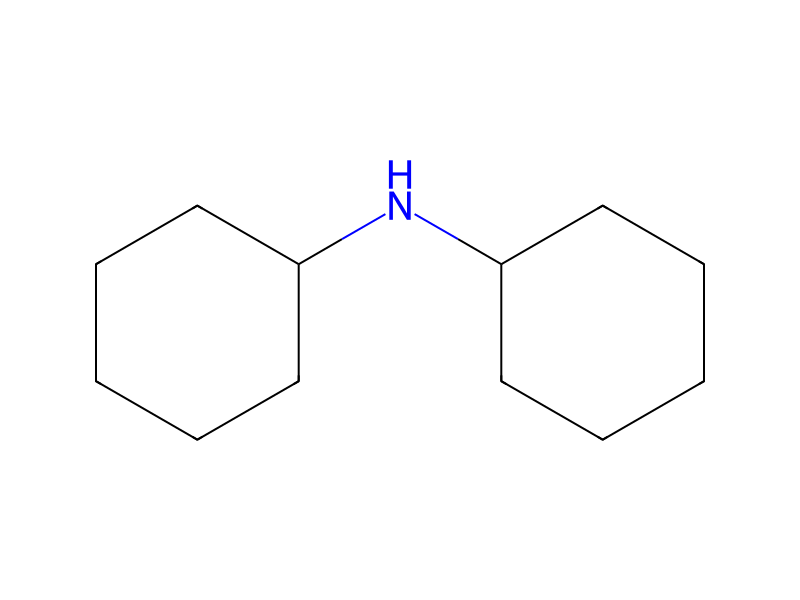
[CH3:1][Si:2]([CH:5](O)[CH3:6])([CH3:4])[CH3:3].[OH:8][C:9]1[CH:18]=[CH:17][C:16]2[CH:15]3[CH2:19][C:20](=[O:21])[CH:12]([CH:13]4[C:25](=[O:26])[O:24][C:22](=[O:23])[CH:14]43)[C:11]=2[CH:10]=1.C1(NC2CCCCC2)CCCCC1.C(N)(C)C.C([OH:47])(C)C>CN(C1C=CN=CC=1)C.C(#N)C>[CH3:1][Si:2]([CH3:4])([CH3:3])[CH2:5][CH2:6][O:47][C:22]([CH:14]1[CH:13]([C:25]([OH:24])=[O:26])[CH:12]2[C:20](=[O:21])[CH2:19][CH:15]1[C:16]1[CH:17]=[CH:18][C:9]([OH:8])=[CH:10][C:11]=12)=[O:23]Participants
Reactant 5




Product 1

Reagents, catalysts & solvents 2


Procedure
DMAP (0.96 g, 7.9 mmol, 10 mol %) and trimethylsilyl-ethanol (12.43 mL, 0.087 mol, 1.1 eq) were added to a stirred suspension of the anhydride from step A (20.5 g, 0.079 mol) in 200 mL acetonitrile and heated to reflux for 7 hours. By HPLC there was some starting material present and the two regioisomers of the opened anhydride were present in a 1:1 ratio. The reaction mixture was cooled and dicyclohexylamine (15.71 mL, 0.079 mol) was added dropwise. A precipitate formed instantaneously but was left overnight. The resulting white salt (40.73 g, 93%) was filtered, suspended in water, acidified with 2 M HCl and extracted with ethyl acetate. An emulsion formed, but was removed by filtration before the layers could be separated, and the organic layer was dried and evaporated in vacuo to give a mixture of the regioisomeric acid-esters as a beige foam (25.59 g, 93%). A hazy solution of the solids (25.59 g, 0.068 mol) in 150 mL isopropanol was treated with isopropylamine (5.79 mL, 0.068 mol) and left stirring overnight. The precipitate was isolated by filtration yielding a white solid (12.44 g, 42% yield) as a 86/17 mixture of diastereomers. This solid was slurried in 48 mL isopropanol for 1.5 hours giving a second white solid (10.69 g) as a 93/7 mixture of diasteroemers. This salt was cracked as described above to give a white foam (6.76 g) which was then triturated in 33 mL 20% diethyl ether/toluene at −20° C. The resulting white solid was collected by filtration and washed with 10 mL cold solvent. This afforded 1 as a white solid (4.59 g, 300% overall yield from the anhydride) of 98.2% purity by HPLC. 1H NMR (acetonitrile-d3) 7.12 (d, J=8.0 Hz, 1H), 6.76 (d, J=2.5 Hz, 1H), 6.72 (dd, J=8.0, 2.5 Hz, 1H), 4.20-4.06 (m, 2H), 3.65 (d, J=3 Hz, 1H), 3.61 (br s, 1H), 3.22 (br d, J=11.0 Hz, 1H), 2.93 (br s, 1H), 2.85 (dd, J=18.3, 2.3 Hz, 1H), 2.04 (br d, 1H), 0.99-0.93 (m, 2H), 0.03 (s, 9H). MS for MNa+ 399.4. Elemental analysis for C19H24O6Si, Theoretical: C, 60.62; H, 6.43. Found: C, 60.61; H, 6.58.
Workup
- temperatureheated
- temperatureto reflux for 7 hours
- temperatureThe reaction mixture was cooled
- customA precipitate formed instantaneously
- filtrationThe resulting white salt (40.73 g, 93%) was filtered
- extractionextracted with ethyl acetate
- customAn emulsion formed
- customwas removed by filtration before the layers
- customcould be separated
- customthe organic layer was dried
- customevaporated in vacuo
- customto give
- waitleft
- customThe precipitate was isolated by filtration
Sources & evidence
- ORD record
- ord-e14fd6fa23864e69b8ed4255ab3c5a35
- Source dataset
- uspto-grants-2005_06
- Patent number
- US06906046B2
Reaction notes
Loading…