Guanidine Hydrochloride → HCID 178479950, compound
Reaction equation

CC(C)([O-])C.[K+].Cl.[NH2:8][C:9]([NH2:11])=[NH:10].[Cl:12][C:13]1[CH:14]=[C:15]2[C:20](=[C:21]([Cl:23])[CH:22]=1)[CH2:19][N:18]([CH3:24])[CH2:17][CH:16]2[C:25]1[CH:26]=[CH:27][C:28]([OH:36])=[C:29]([CH:35]=1)[C:30](OCC)=[O:31]>CN(C=O)C>[Cl:12][C:13]1[CH:14]=[C:15]2[C:20](=[C:21]([Cl:23])[CH:22]=1)[CH2:19][N:18]([CH3:24])[CH2:17][CH:16]2[C:25]1[CH:26]=[CH:27][C:28]([OH:36])=[C:29]([CH:35]=1)[C:30]([NH:10][C:9]([NH2:11])=[NH:8])=[O:31]Participants
Reactant 3
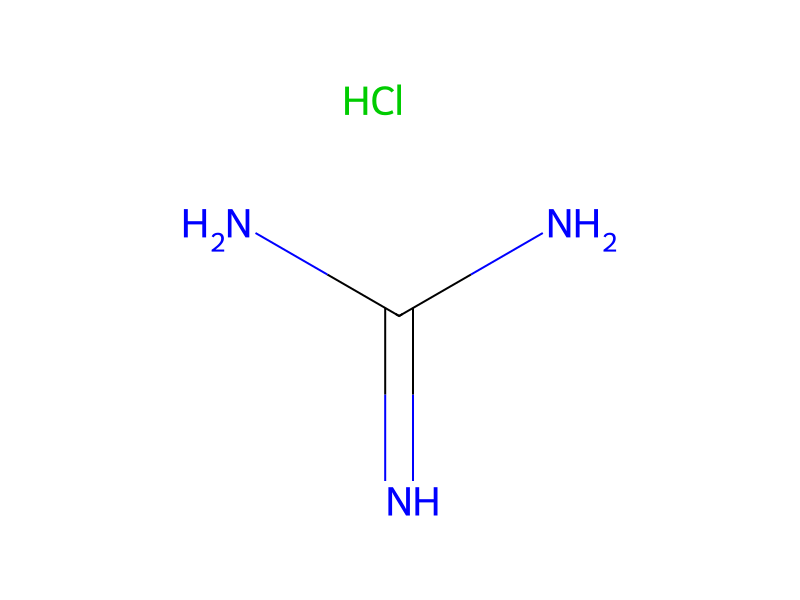


Product 1

Reagents, catalysts & solvents 1

Procedure
2.52 g of potassium tert-butoxide was added to a solution of 2.39 g (25 mmol) of guanidine hydrochloride in 15 ml of abs. DMF and stirred at room temperature for 45 min. A solution of 950 mg (2.5 mmol) of ethyl 5-(6,8-dichloro-2-methyl-1,2,3,4-tetrahydro-isoquinolin-4-yl)-2-hydroxy-benzoate (example 29, intermediate 3) in 10 ml of abs. DMF was added, and the mixture was stirred at room temperature for four hours. After no further increase in conversion was detectable, the precipitate was removed by filtration with suction and the solvent was removed in vacuo. The residue was taken up in 2 N HCl and extracted twice with dichloromethane. The aqueous phase was adjusted to a pH of about 10 with KOH, whereupon the desired acylguanidine separates out as a colorless precipitate. Filtration with suction and drying affords 793 mg of the title compound.
Workup
- temperatureAfter no further increase in conversion
- customthe precipitate was removed by filtration with suction
- customthe solvent was removed in vacuo
- extractionextracted twice with dichloromethane
- filtrationFiltration with suction
- customdrying
Sources & evidence
- ORD record
- ord-92a159ae54b54362b7ec8322887b99b2
- Source dataset
- uspto-grants-2005_06
- Patent number
- US06911453B2
Reaction notes
Loading…