Ampicillin → L-Phenylalanine
Reaction equation

C1N=C(N)C2N=CN([C@@H]3O[C@H](COP(OP(OC[C@H]4O[C@@H](N5C=C(C(N)=O)CC=C5)[C@H](O)[C@@H]4O)(O)=O)(O)=O)[C@@H](O)[C@H]3O)C=2N=1.CC1(C)S[C@@H]2[C@H]([NH:54][C:55]([C@H:57](N)[C:58]3[CH:59]=[CH:60][CH:61]=[CH:62][CH:63]=3)=O)C(=O)N2[C@H]1C(O)=O.[NH4+].[Cl-].[NH4+].[OH-].C1(CC(=O)[C:81]([O-:83])=[O:82])C=CC=CC=1.[Na+].OC1O[C@H](CO)[C@@H](O[C@@H]2O[C@H](CO)[C@H](O)[C@H](O)[C@H]2O)[C@H](O)[C@H]1O>>[NH2:54][C@H:55]([C:81]([OH:83])=[O:82])[CH2:57][C:58]1[CH:63]=[CH:62][CH:61]=[CH:60][CH:59]=1Participants

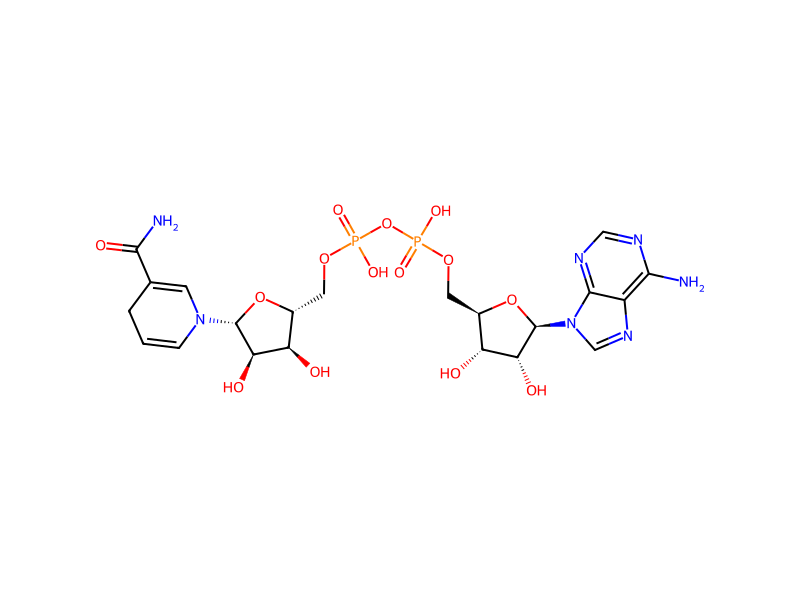


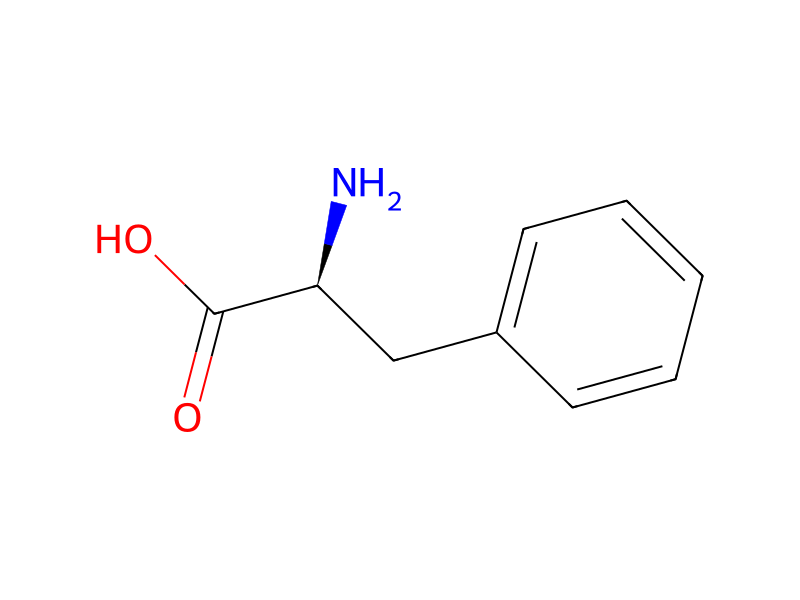
Procedure
L-phenylalanine was synthesized using cells of E. coli RR1 containing the plasmid pBPDH3. As an NADH regeneration system, enzymes for glycolysis in E. coli were used. The above-mentioned E. coli was inoculated in an LB medium containing 50 μg/ml of ampicillin at a ratio of 1%, and cultured at 37° C. for 6 hours. The 5 ml of the cultured broth was centrifuged to collect cells, which were then washed with a 0.85% NaCl solution. The cells were suspended in 3 ml of a reaction mixture containing 200 μ moles of an NH4Cl-NH4OH buffer (pH 9.0), 109 μ moles of a sodium phenylpyruvate, and 267 μ moles of a lactose, and the suspension was allowed to stand at 30° C. for 24 hours. As a result, 20 mg/ml (yield 33%) of L-phenylalanine was accumulated, as determined by the above-mentioned L-phenylalanine assay procedure.
Workup
- customL-phenylalanine was synthesized
- additioncoli RR1 containing the plasmid pBPDH3
- customto collect cells, which
- washwere then washed with a 0.85% NaCl solution
- waitto stand at 30° C. for 24 hours
Sources & evidence
- ORD record
- ord-27f0aafed0eb4c3e814625b5564d4521
- Source dataset
- uspto-grants-1990_11
- Patent number
- US04970157
Reaction notes
Loading…