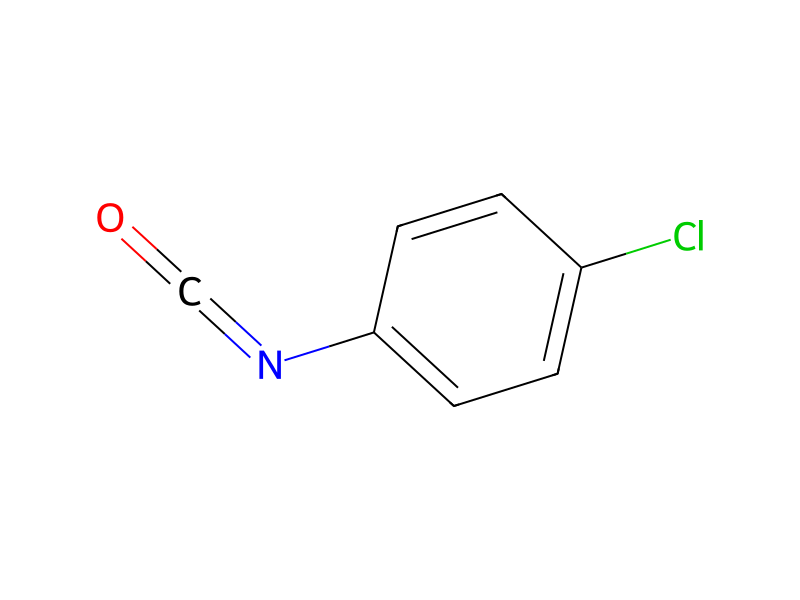
4-Chlorophenyl Isocyanate → HCID 131710199, compound
Reaction equation

[CH2:1]1[C:6]2([C:15](=[O:16])[NH:14][C:8]3([CH2:13][CH2:12][CH2:11][CH2:10][CH2:9]3)[NH:7]2)[CH2:5][CH2:4][CH2:3][CH2:2]1.[Cl:17][C:18]1[CH:23]=[CH:22][C:21]([N:24]=[C:25]=[O:26])=[CH:20][CH:19]=1.N12CCN(CC1)CC2>C1C=CC=CC=1>[Cl:17][C:18]1[CH:23]=[CH:22][C:21]([NH:24][C:25]([N:14]2[C:15](=[O:16])[C:6]3([CH2:1][CH2:2][CH2:3][CH2:4][CH2:5]3)[NH:7][C:8]32[CH2:13][CH2:12][CH2:11][CH2:10][CH2:9]3)=[O:26])=[CH:20][CH:19]=1Participants
5
Reactant 3


Product 1

Reagents, catalysts & solvents 1

Procedure
5.5 Parts of 7,14-diazadispiro[5.1.5.2]pentadecan-15-one, 3.84 parts of p-chlorophenyl isocyanate and a trace of 1,4-diazabicyclo[2.2.2]octane in 100 parts of dry benzene were heated at reflux for 36 hours. The solvent was removed in vacuo to yield a solid material which was recrystallised twice from petroleum ether of boiling range 60° to 80°C affording 5.6 parts of 14-p-chlorophenylcarbamoyl-7,14-diazadispiro[5.1.5.2]pentadecan-15-one as colourless needles of melting point 139° to 141°C. This material gave the following elemental analysis by weight:
Workup
- temperatureat reflux for 36 hours
- customThe solvent was removed in vacuo
- customto yield a solid material which
- customwas recrystallised twice from petroleum ether of boiling range 60° to 80°C
Sources & evidence
- ORD record
- ord-1d0bc22937c54ac68abae1c2dc916f08
- Source dataset
- uspto-grants-1976_05
- Patent number
- US03956310
Reaction notes
Loading…