Hydrochloric Acid → Ethyl 3-(dimethylamino)-1,2,3,4-tetrahydrocarbazole-9-propionate
Reaction equation

[CH3:1][N:2]([CH3:16])[CH:3]1[CH2:15][C:14]2[C:13]3[C:8](=[CH:9][CH:10]=[CH:11][CH:12]=3)[NH:7][C:6]=2[CH2:5][CH2:4]1.[C:17]([O:21][CH2:22][CH3:23])(=[O:20])[CH:18]=[CH2:19].[OH-].C([N+](C)(C)C)C1C=CC=CC=1.Cl>CO.C(O)C.C1C=CC=CC=1>[CH3:1][N:2]([CH3:16])[CH:3]1[CH2:15][C:14]2[C:13]3[C:8](=[CH:9][CH:10]=[CH:11][CH:12]=3)[N:7]([CH2:19][CH2:18][C:17]([O:21][CH2:22][CH3:23])=[O:20])[C:6]=2[CH2:5][CH2:4]1Participants
8
Reactant 4



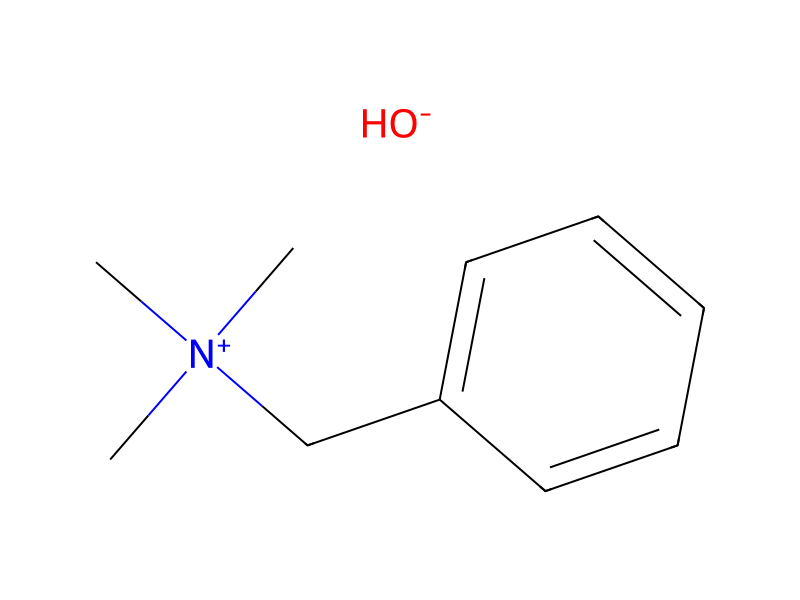
Product 1

Reagents, catalysts & solvents 3



Procedure
Following a procedure similar to that described in Example 256 and using 20 g. of 3-(dimethylamino)-1,2,3,4-tetrahydrocarbazole, 20 g. of ethyl acrylate, 1 ml. of 35% benzyltrimethylammonium hydroxide in methyl alcohol and 150 ml. of benzene and increasing the reflux time to three hours, there was obtained, on the evaporation of the reaction mixture to dryness, on oil, a solution of which in ethyl alcohol was treated with hydrogen chloride in ethyl alcohol. The resulting solids were filtered to give, after recrystallization from aqueous ethyl alcohol, 20.5 g. of ethyl 3-(dimethylamino)-1,2,3,4-tetrahydrocarbazole-9-propionate hydrochloride, m.p. 259°-261°C.
Workup
- customthere was obtained, on the evaporation of the reaction mixture to dryness, on oil
- filtrationThe resulting solids were filtered
- customto give
- customafter recrystallization from aqueous ethyl alcohol, 20.5 g
Sources & evidence
- ORD record
- ord-0a6fb53bac554c8a8de30cffa620ca6a
- Source dataset
- uspto-grants-1976_05
- Patent number
- US03959309
Reaction notes
Loading…