Ethanol → 4-(Octyloxy)benzonitrile
Reaction equation

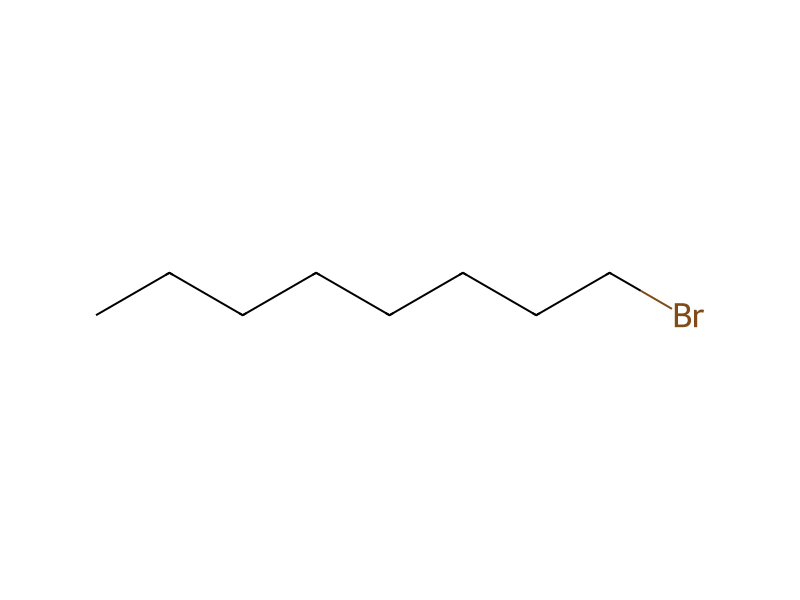
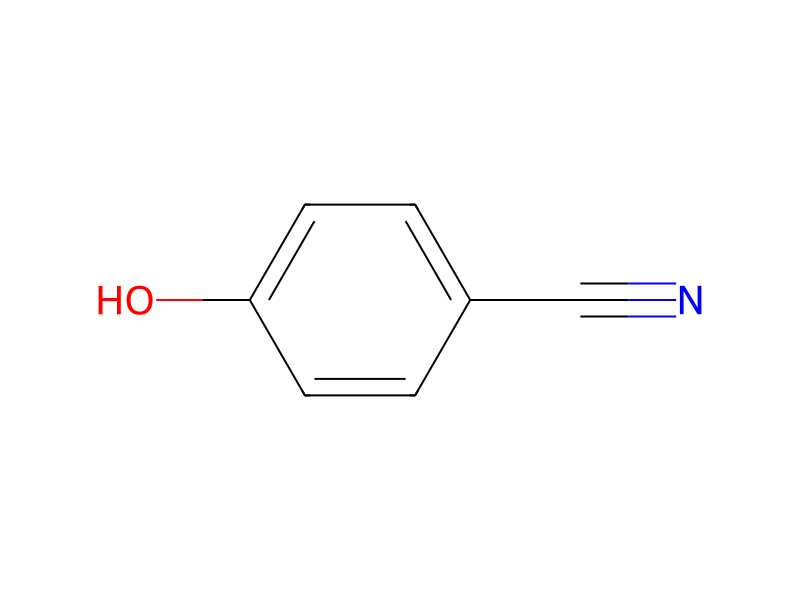
[OH:1][C:2]1[CH:9]=[CH:8][C:5]([C:6]#[N:7])=[CH:4][CH:3]=1.[CH2:10](Br)[CH2:11][CH2:12][CH2:13][CH2:14][CH2:15][CH2:16][CH3:17].[OH-].[K+].C(O)C>O>[CH2:10]([O:1][C:2]1[CH:9]=[CH:8][C:5]([C:6]#[N:7])=[CH:4][CH:3]=1)[CH2:11][CH2:12][CH2:13][CH2:14][CH2:15][CH2:16][CH3:17]Participants
6
Reactant 4


Product 1

Reagents, catalysts & solvents 1

Procedure
A 1-liter round bottom flask was charged with 50 g of p-hydroxybenzonitrile, 89.2 g of octyl bromide, 23.5 g of potassium hydroxide and 500 ml of ethanol. A calcium chloride tube was attached to the flask and the content was refluxed for 4 hours. Then, one liter of water was added into the flask, followed by extraction with 1300 ml of dichloromethane. The extract was washed with water and dried over anhydrous sodium sulfate. After distilling the solvent off, the remaining system was purified by means of silica gel column chromatography to provide 80.6 g of 4-octyloxybenzonitrile (Compound A).
Workup
- customA calcium chloride tube was attached to the flask
- temperaturethe content was refluxed for 4 hours
- extractionfollowed by extraction with 1300 ml of dichloromethane
- washThe extract was washed with water
- dry with materialdried over anhydrous sodium sulfate
- distillationAfter distilling the solvent off, the remaining system
- customwas purified by means of silica gel column chromatography
Sources & evidence
- ORD record
- ord-54f2f1187e024bc0bd8b8521cdb43918
- Source dataset
- uspto-grants-1996_12
- Patent number
- US05587106
Reaction notes
Loading…