Water → alpha-(2-Nitrophenyl)-p-bromocinnamic acid
Reaction equation

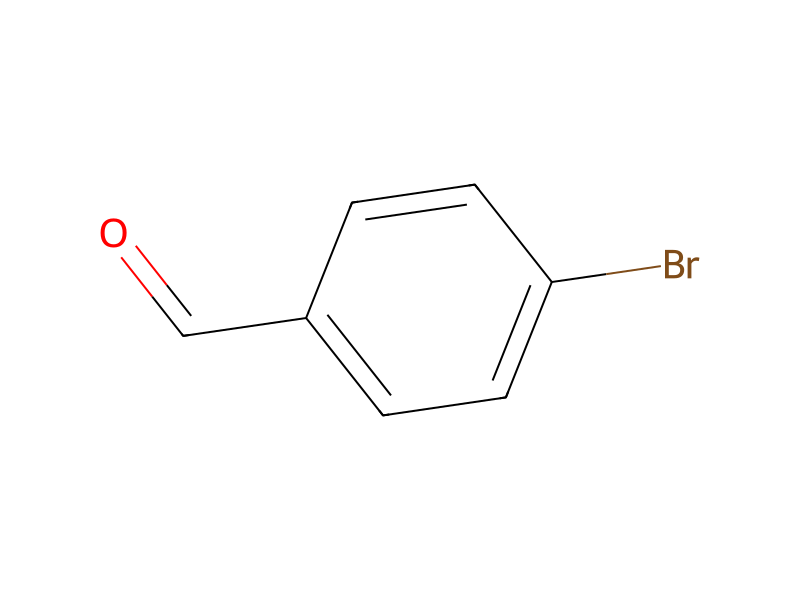
[Br:1][C:2]1[CH:9]=[CH:8][C:5]([CH:6]=O)=[CH:4][CH:3]=1.[N+:10]([C:13]1[CH:18]=[CH:17][CH:16]=[CH:15][C:14]=1[CH2:19][C:20]([OH:22])=[O:21])([O-:12])=[O:11].C(N(CC)CC)C.O>C(OC(=O)C)(=O)C>[N+:10]([C:13]1[CH:18]=[CH:17][CH:16]=[CH:15][C:14]=1[C:19](=[CH:6][C:5]1[CH:8]=[CH:9][C:2]([Br:1])=[CH:3][CH:4]=1)[C:20]([OH:22])=[O:21])([O-:12])=[O:11]Participants
6
Reactant 4



Product 1

Reagents, catalysts & solvents 1

Procedure
A solution of 4-bromobenzaldehyde (27.75 g, 0.150 mol), 2-nitrophenylacetic acid (27.18 g, 0.150 mol) and triethylamine (21.0 ml, 0.150 mol) in 150 ml of acetic anhydride was heated at 40° C. for 38 hours and then poured into 900 ml of water and stirred until the organic layer solidified. The solid was isolated by filtration and dried in vacuo to yield 48.3 g (92%) of the title compound as a tan solid which was sufficiently pure to use directly in the next reaction.
Workup
- customThe solid was isolated by filtration
- customdried in vacuo
Sources & evidence
- ORD record
- ord-eeb044bd333d44168208e80578af443d
- Source dataset
- uspto-grants-1991_04
- Patent number
- US05004739
Reaction notes
Loading…