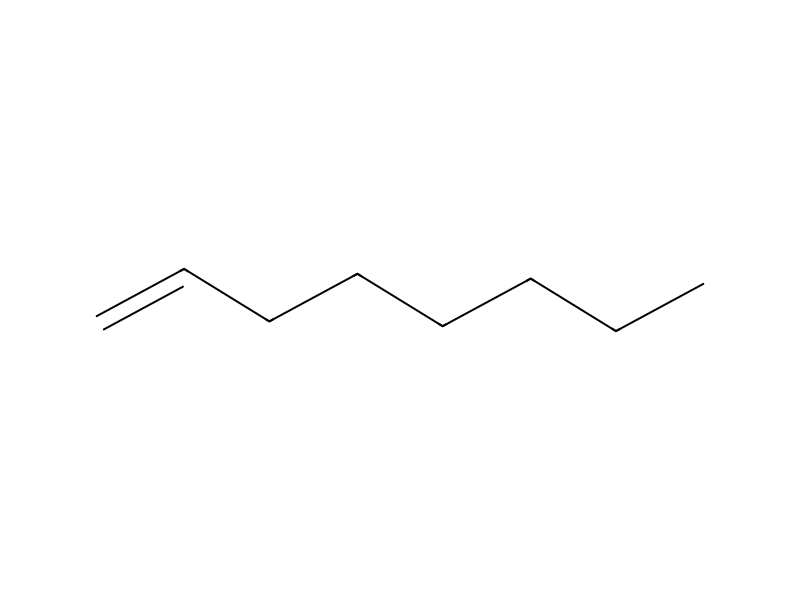
1-Octene → Nonanal
Reaction equation

C([CH:3]([CH2:7][CH2:8][CH2:9][CH3:10])[C:4]([O-:6])=O)C.[C:11]1(P(C2C=CC=CC=2)CC2C(CP(C3C=CC=CC=3)C3C=CC=CC=3)=CC=CC=2)[CH:16]=CC=C[CH:12]=1.C=CCCCCCC.[H][H].[C]=O>[Rh].C1(C)C=CC=CC=1>[CH:4](=[O:6])[CH2:3][CH2:7][CH2:8][CH2:9][CH2:10][CH2:12][CH2:11][CH3:16]Participants



Conditions
- Temperature
- 105 °C
Procedure
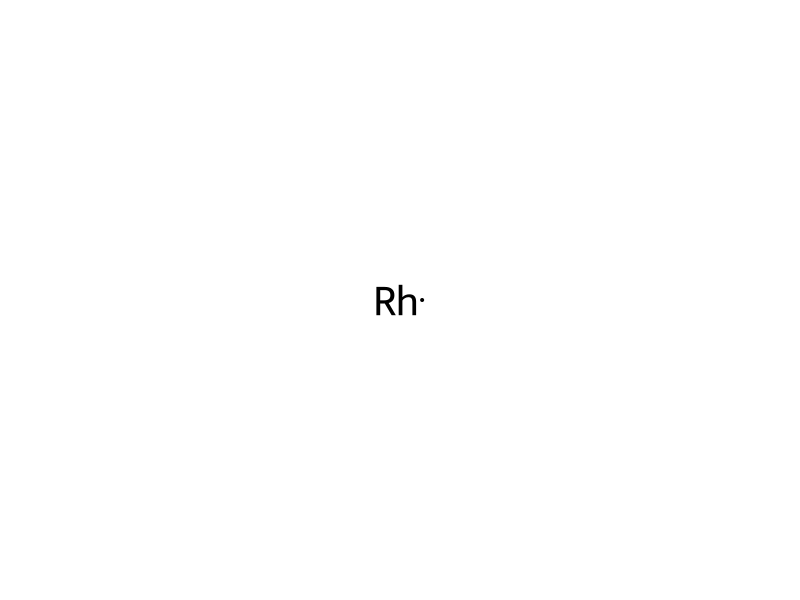
A 300-mL stainless steel autoclave equipped with a magnetically driven stirrer was charged under nitrogen with rhodium (14.55 mg of rhodium, 0.14 mmole charged as the 2-ethylhexanoate salt), α,α'-bis(diphenylphosphino)-o-xylene ligand (0.16 gm, 0.34 mmole), 1-octene (22.44 grams), and toluene (70 mL). This was pressured to 300 psig with a 1/1 mixture of hydrogen/carbon monoxide (synthesis gas) and heated to 105° C. The autoclave was repressured to 300 psig with the synthesis gas mixture whenever the pressure dropped to 250 psig. The reaction was kept at 105° C. for 2 hours, during which time a total pressure drop of 460 psig was observed. The mixture was analyzed by gas/liquid chromatography and showed a 94.3 percent conversion of 1-octene. A 90.6 percent yield to isomeric nonanal products was obtained based on 1-octene charged. The ratio of linear/branched nonanal product was 3.47/1.
Workup
- customThe autoclave was repressured to 300 psig with the synthesis gas mixture whenever the pressure
- additiondropped to 250 psig
Sources & evidence
- ORD record
- ord-8b0d2e6a9e964af7a4d73b35e0dc2c11
- Source dataset
- uspto-grants-1991_04
- Patent number
- US05004823
Reaction notes
Loading…