4-(2-Hydroxyethyl)-1-piperazineethanesulfonic acid → Quinine
Reaction equation

[CH3:1][O:2][C:3]1[CH:4]=[CH:5][C:6]2[N:12]=[CH:11][CH:10]=[C:9]([C@@H:13]([OH:24])[C@H:14]3[N:19]4[CH2:20][C@H:21]([CH:22]=[CH2:23])[C@@H:16]([CH2:17][CH2:18]4)[CH2:15]3)[C:7]=2[CH:8]=1.Cl.C1N(CCO)CCN(CCS(O)(=O)=O)C1>C(OCC)C>[CH3:1][O:2][C:3]1[CH:4]=[CH:5][C:6]2[N:12]=[CH:11][CH:10]=[C:9]([C@@H:13]([OH:24])[C@H:14]3[N:19]4[CH2:20][C@H:21]([CH:22]=[CH2:23])[C@@H:16]([CH2:17][CH2:18]4)[CH2:15]3)[C:7]=2[CH:8]=1Participants
4
Reactant 2
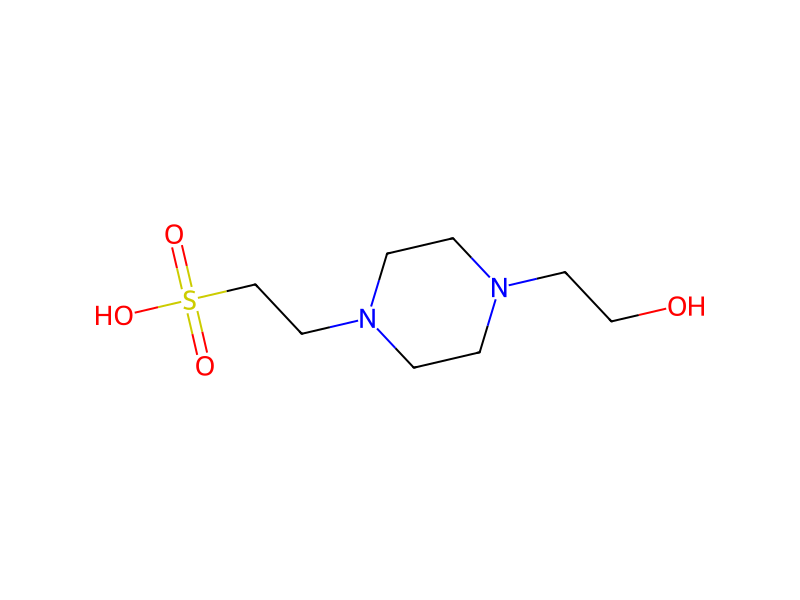

Product 1

Reagents, catalysts & solvents 1

Procedure
0.5 ml of diethyl ether containing egg phosphatidylcholine at a concentration of 100 mg/ml and 0.3 ml quinine-HCl solution at 40 mg/ml of Hepes buffer (pH 7.2) were mixed and sonicated while evaporating the ether with a stream of nitrogen. This process and the subsequent steps in prepartion of liposomes was done as described for chloroquine liposomes Example 1. The entrapment of quinine in liposomes was 48.5%.
Workup
- customsonicated
- customwhile evaporating the ether with a stream of nitrogen
Sources & evidence
- ORD record
- ord-0e8ba01d489b4fbfa3ad297d8c615fbd
- Source dataset
- uspto-grants-1991_04
- Patent number
- US05009819
Reaction notes
Loading…