Ethylbenzene → Anthracene
Reaction equation

[CH:1]1[C:14]2[C:5](=[CH:6][C:7]3[C:12]([CH:13]=2)=[CH:11][CH:10]=[CH:9][CH:8]=3)[CH:4]=[CH:3][CH:2]=1.[CH2:15]([C:17]1[CH:22]=[CH:21][CH:20]=[CH:19][CH:18]=1)[CH3:16].C=CC1C=CC=CC=1>C1(C)C(C)=CC=CC=1>[CH:4]1[C:5]2[C:14](=[CH:13][C:12]3[C:7]([CH:6]=2)=[CH:8][CH:9]=[CH:10][CH:11]=3)[CH:1]=[CH:2][CH:3]=1.[CH2:16]=[CH:15][C:17]1[CH:22]=[CH:21][CH:20]=[CH:19][CH:18]=1.[CH:4]1[C:5]2[C:14](=[CH:13][C:12]3[C:7]([CH:6]=2)=[CH:8][CH:9]=[CH:10][CH:11]=3)[CH:1]=[CH:2][CH:3]=1Participants
6
Reactant 3


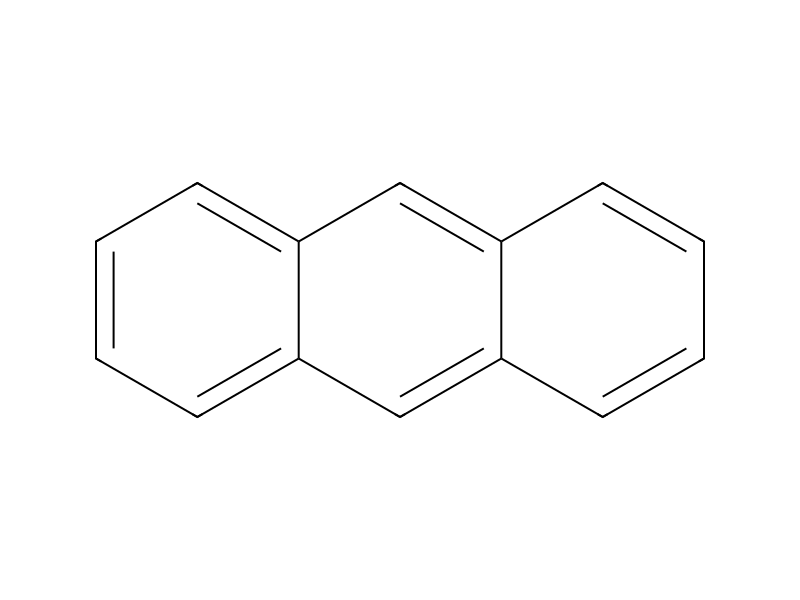
Product 2

Reagents, catalysts & solvents 1

Procedure
In an preferred embodiment, the adduct-forming reaction is carried out under a temperature and pressure maintained to keep the feedstock, anthracene and adduct in the liquid state. After adduction, xylene, ethylbenzene, unreacted styrene and similar volatiles are flashed off leaving molten anthracene and styrene-anthracene adduct. The remaining liquid mixture is then heated to pyrolyze the styrene-anthracene adduct and distill off the styrene. The remaining molten anthracene from this pyrolysis is cooled and recycled as a liquid back to the adduction reaction.
Workup
- customIn an preferred embodiment, the adduct-forming reaction
- temperaturemaintained
Sources & evidence
- ORD record
- ord-e2ea7030afc747f89c1f6e6cf0119ebc
- Source dataset
- uspto-grants-1991_04
- Patent number
- US05012034
Reaction notes
Loading…