Triethylamine → HCID 53781460, compound
Reaction equation

[CH2:1]1[C:10]2[C:5](=[CH:6][CH:7]=[CH:8][CH:9]=2)[CH2:4][CH2:3][CH:2]1[CH2:11][C:12]([OH:14])=O.CCN=C=NCCCN(C)C.Cl.Cl.[CH3:28][O:29][C:30](=[O:36])[C@@H:31]1[CH2:35][CH2:34][CH2:33][NH:32]1.C(N(CC)CC)C>C(Cl)Cl>[CH3:28][O:29][C:30](=[O:36])[C@@H:31]1[CH2:35][CH2:34][CH2:33][N:32]1[C:12](=[O:14])[CH2:11][CH:2]1[CH2:3][CH2:4][C:5]2[C:10](=[CH:9][CH:8]=[CH:7][CH:6]=2)[CH2:1]1Participants
6
Reactant 4


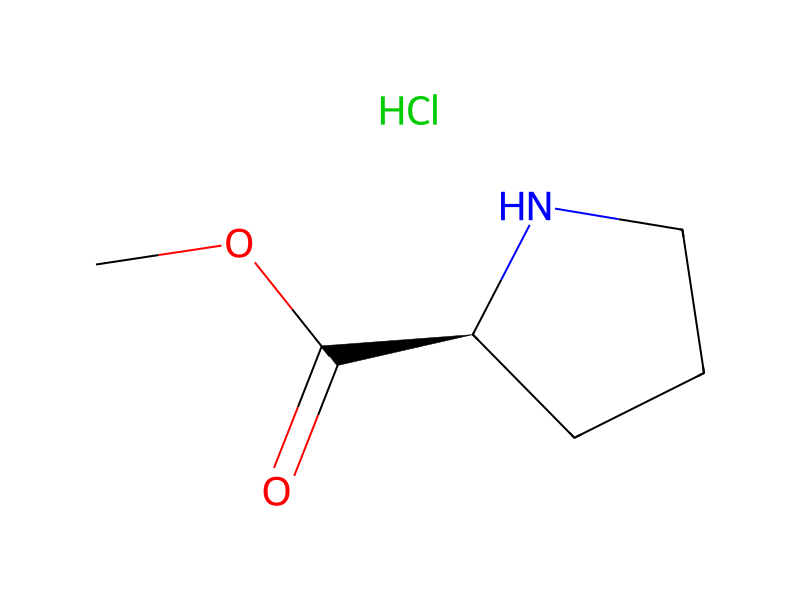

Product 1

Reagents, catalysts & solvents 1

Procedure
To a solution of 3.4 g of 1,2,3,4-tetrahydronaphthalen-2-ylacetic acid in 50 ml of methylene chloride was added 14.1 g of WSC.HCl with stirring at room temperature. Then, 3.6 g of L-proline methyl ester hydrochloride and 2.2 g of triethylamine were added to the solution. The mixture was stirred for 17 hours at room temperature. The reaction mixture was washed with water, diluted hydrochloric acid, and saturated sodium hydrogen carbonate in this order. The organic layer was dried over anhydrous magnesium sulfate, and the solvent was evaporated under reduced pressure to obtain 3.6 g of 1-(1,2,3,4-tetrahydronaphthalen-2-ylacetyl)-L-proline methyl ester as a colorless oil.
Workup
- stirringThe mixture was stirred for 17 hours at room temperature
- washThe reaction mixture was washed with water, diluted hydrochloric acid, and saturated sodium hydrogen carbonate in this order
- dry with materialThe organic layer was dried over anhydrous magnesium sulfate
- customthe solvent was evaporated under reduced pressure
Sources & evidence
- ORD record
- ord-cd39a0a7ae1448f895222c2fedae1674
- Source dataset
- uspto-grants-1991_07
- Patent number
- US05028604
Reaction notes
Loading…