Hydrochloric Acid → HCID 12218047, compound
Reaction equation

[OH-].[Na+].[C:3]1(CC(=O)C(O)=O)C=CC=CC=1.CI.Cl.[O:18]=[C:19]([CH:23]([C:25]1[CH:30]=[CH:29][CH:28]=[CH:27][CH:26]=1)[CH3:24])[C:20]([OH:22])=[O:21]>CN(C)C=O>[O:18]=[C:19]([C:23]([CH3:3])([C:25]1[CH:30]=[CH:29][CH:28]=[CH:27][CH:26]=1)[CH3:24])[C:20]([OH:22])=[O:21]Participants

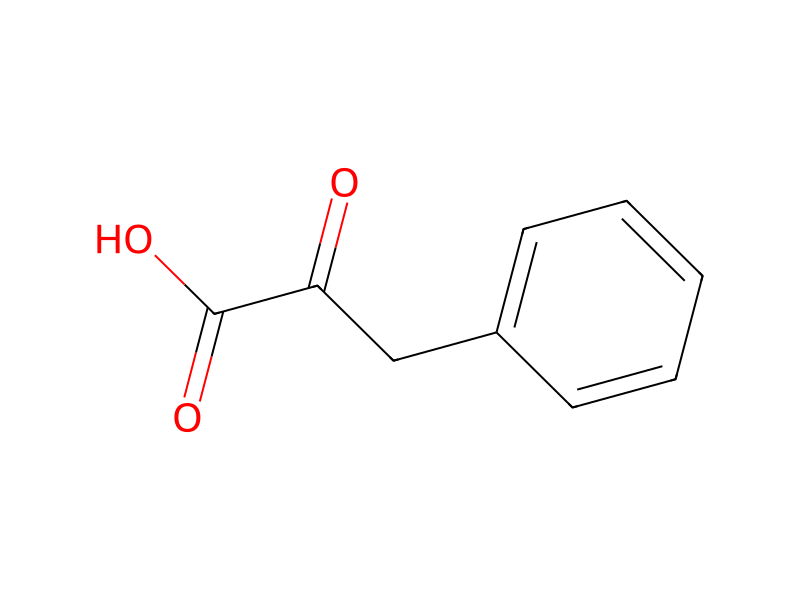





Procedure
A 1N aqueous solution of sodium hydroxide (20 ml, 20 mmoles) and 30 ml of dimethylformamide were added to 1.64 g (10.0 mmoles) of phenylpyruvic acid to form a solution. Then, 2.0 ml of methyl iodide was added, and the mixture was stirred at room temperature for 10 hours. The reaction mixture was acidified with 1N hydrochloric acid, and extracted with 150 ml of ether. The ether layer was dried over magnesium sulfate, and concentrated under reduced pressure to give a pale yellowish white solid. Analysis of its NMR spectrum showed that 2-oxo-3-phenylbutanoic acid formed in a yield of 59%, and 2-oxo-3-methyl-3-phenylbutanoic acid, in a yield of 21%. The NMR spectrum of the former is shown in Example 1, and that of the latter is shown in Example 73.
Workup
- customto form a solution
- extractionextracted with 150 ml of ether
- dry with materialThe ether layer was dried over magnesium sulfate
- concentrationconcentrated under reduced pressure
- customto give a pale yellowish white solid
Sources & evidence
- ORD record
- ord-fde864653b40408685b916085e9df722
- Source dataset
- uspto-grants-1991_07
- Patent number
- US05028738
Reaction notes
Loading…