Triethylamine → Saccharin
Reaction equation

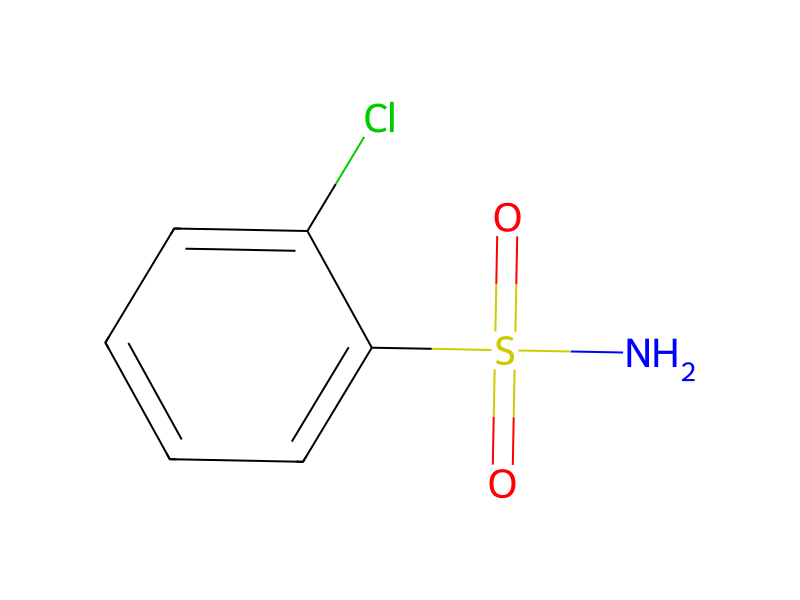
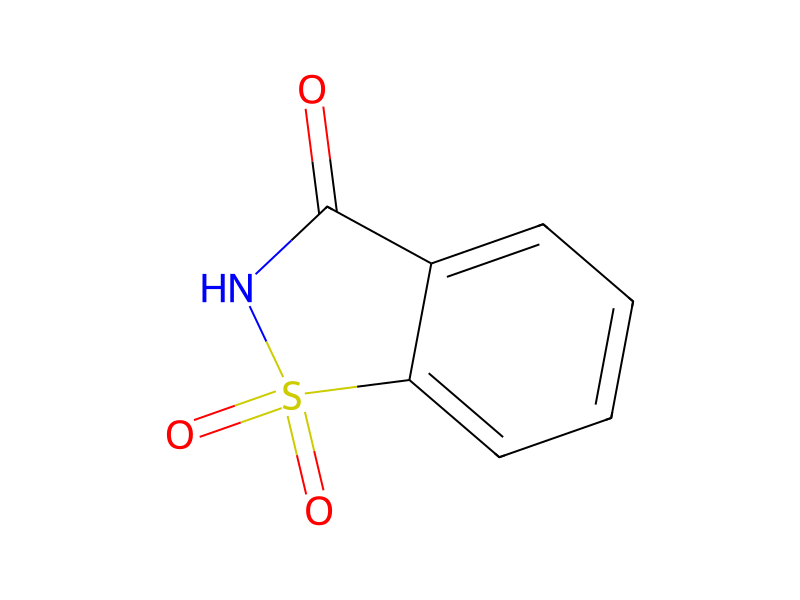
Cl[C:2]1[CH:7]=[CH:6][CH:5]=[CH:4][C:3]=1[S:8]([NH2:11])(=[O:10])=[O:9].C(N(CC)CC)C.C1(P(C2C=CC=CC=2)CCCP(C2C=CC=CC=2)C2C=CC=CC=2)C=CC=CC=1.[O:48]1CCOC[CH2:49]1>>[S:8]1([C:3]2[C:2](=[CH:7][CH:6]=[CH:5][CH:4]=2)[C:49](=[O:48])[NH:11]1)(=[O:10])=[O:9]Participants



Procedure
A 90 mL glass pressure tube was charged in a nitrogen dry box with 2 g (10.4 mmol) of 2-chlorobenzenesulfonamide, 2.35 g (20.8 mmol) of triethylamine, 30 mg (0.067 mmol) of Pd(CH3CN)4 (BF4)2, 30 mg (0.073 mmol) of 1,3-bis(diphenyl-phosphino)propane (dppp) and 6 mL of dioxane. The resulting suspension was stirred at room temperature for 30 min, cooled to -80° C., evacuated and charged with 70 psia of CO. After stirring at room temperature for 30 min, the tube was heated with stirring at 120° C. for 48 hours (hrs). Upon cooling to room temperature, the pressure was 38 psia and much solid formed. The pressure was released, 20 mL of dioxane were added to the reaction mixture to redissolve the solid, and the precipitate was isolated by filtration and washed with 5 mL of dioxane, three times, to yield 0.95 g of HNEt3+Cl-. The reaction of Example 2 to this point can be also illustrated by the general formula provided in Example 1. The filtrate was combined with the washings and the solvent was removed in a vacuum to yield 2.84 g of almost pure saccharin salt A with [HN(C2H5)3 ]+ and Cl-. To this material were added 60 mL of water followed by 1.6 g of NaOH. The resulting solution was filtered, concentrated under vacuum, and 4 g of HCl 38% by weight of the solution were added. A copious white precipitate was formed, and isolated by filtration and washed with a small amount of cold water. 1.73 g (91.4% of the calculated amount of saccharin expected based on the measured amounts of the ingredients) of pure saccharin was obtained after vacuum drying. This reaction step from the saccharin salt to saccharin is illustrated by the following general formula: ##STR6##
Workup
- additionA 90 mL glass pressure tube was charged in a nitrogen
- temperaturecooled to -80° C.
- customevacuated
- additioncharged with 70 psia of CO
- stirringAfter stirring at room temperature for 30 min
- temperaturethe tube was heated
- stirringwith stirring at 120° C. for 48 hours (hrs)
- temperatureUpon cooling to room temperature
- customformed
- dissolutionto redissolve the solid
- customthe precipitate was isolated by filtration
- washwashed with 5 mL of dioxane, three times
- customto yield 0.95 g of HNEt3+Cl-
- customThe reaction of Example 2 to this point
- customprovided in Example 1
- customthe solvent was removed in a vacuum
Sources & evidence
- ORD record
- ord-5b55949020d4406bb6fdd0bf8cc8fbcd
- Source dataset
- uspto-grants-1991_07
- Patent number
- US05034534
Reaction notes
Loading…