Benzaldehyde → N-Benzyl-2-(3,4-dimethoxyphenyl)-N-methylethan-1-amine
Reaction equation

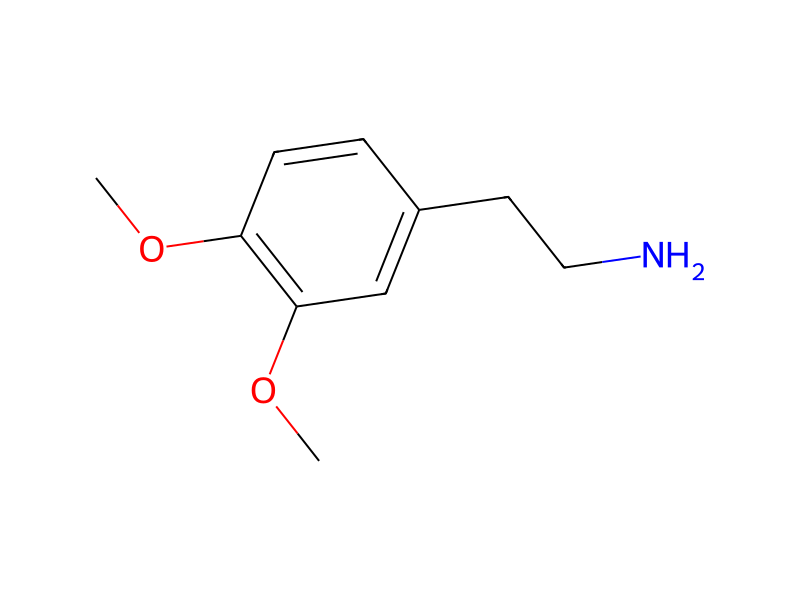
[CH3:1][O:2][C:3]1[CH:4]=[C:5]([CH:9]=[CH:10][C:11]=1[O:12][CH3:13])[CH2:6][CH2:7][NH2:8].[CH:14](=O)[C:15]1[CH:20]=[CH:19][CH:18]=[CH:17][CH:16]=1.C=O.[CH2:24](O)C>[Pd].C(O)C.C(Cl)Cl>[CH2:14]([N:8]([CH2:7][CH2:6][C:5]1[CH:9]=[CH:10][C:11]([O:12][CH3:13])=[C:3]([O:2][CH3:1])[CH:4]=1)[CH3:24])[C:15]1[CH:20]=[CH:19][CH:18]=[CH:17][CH:16]=1Participants
7






Procedure
In the first step 3,4-dimethoxyphenethylamine, benzaldehyde and formaldehyde are hydrogenated in the presence of a catalyst, e.g. palladium on carbon, either at normal or slightly elevated pressure, preferably a pressure of 2-3 atm (0.2-0.3 MPa), and the temperature is room temperature or slightly elevated temperature, preferably 20°-30° C. As solvent is used an organic solvent, e.g. ethanol or an ethanol-methylenechloride (1:1)-mixture. The desired product, N-benzyl-N-methyl-3,4-dimethoxyphenethylamine (II) is obtained in a very pure state, when it is precipitated as an acid addition salt, e.g. hydrobromide. As free base the product is oily and difficult to handle.
Workup
- customis room temperature
- customslightly elevated temperature, preferably 20°-30° C
Sources & evidence
- ORD record
- ord-4978a55266074066bc871364a218b1ef
- Source dataset
- uspto-grants-1990_10
- Patent number
- US04960939
Reaction notes
Loading…