1,1,1-Trichloroethane → 1,1,1-Trichloroethane
Reaction equation

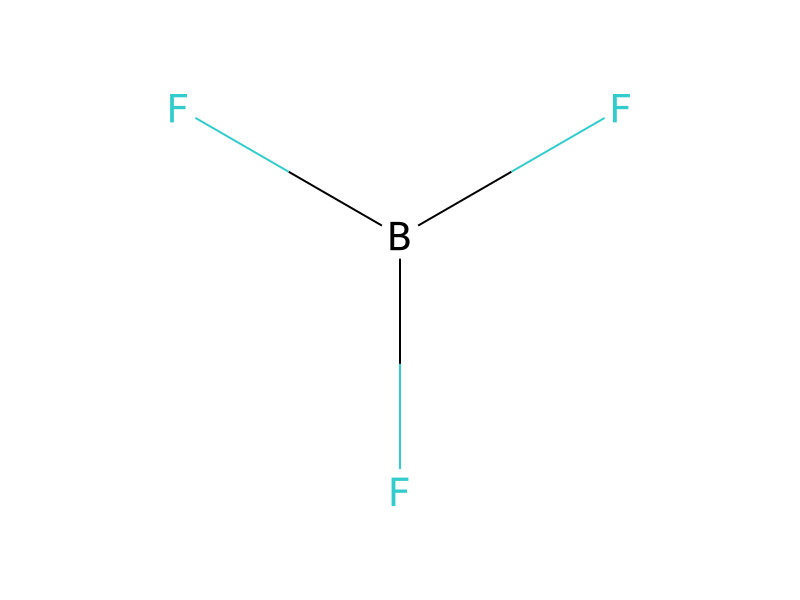
F.[Cl:2][C:3]([Cl:6])([Cl:5])[CH3:4].B(F)(F)[F:8]>>[Cl:2][C:3]([Cl:6])([Cl:5])[CH3:4].[Cl:2][C:3]([Cl:6])([F:8])[CH3:4]Participants


Procedure
The data indicates that using a 3.3:1 molar ratio of hydrogen fluoride to 1,1,1-trichloroethane, in the presence of 1.4 mole % boron trifluoride, based upon the combined amounts of hydrogen fluoride and boron trifluoride, results in 60% conversion of 1,1,1-trichloroethane at 60° C., with 97.3% selectivity for 1,1-dichloro-1-fluoroethane. At 75° C., conversion increased to 98.1%, while selectivity for 1,1-dichloro-1-fluoroethane was still 67.5%, with the only by-product being 1-chloro-1,1-difluoroethane. Vinylidene chloride was not a by-product at either 60° C. or 75° C. In the absence of the catalyst, however, conversion of 1,1,1-trichloroethane was only 20% at 70° C., and the product contained 1 mole % vinylidene chloride. Increasing the concentration of boron trifluoride to 2.4 mole % increased the rate of conversion of 1,1,1-trichloroethane to 84%, while selectivity for 1,1-dichloro-1-fluoroethane decreased to 58.4%. No vinylidene chloride was produced.
Sources & evidence
- ORD record
- ord-27b88d4201c1485c8aa6fb67e53e8c09
- Source dataset
- uspto-grants-1990_10
- Patent number
- US04962244
Reaction notes
Loading…