Methanol → 4-Hydroxybenzaldehyde
Reaction equation

CO.C[O:4][C:5]1[CH:12]=[CH:11][C:8]([CH:9]=[O:10])=[CH:7][CH:6]=1>O>[OH:4][C:5]1[CH:12]=[CH:11][C:8]([CH:9]=[O:10])=[CH:7][CH:6]=1Participants
4
Reactant 2

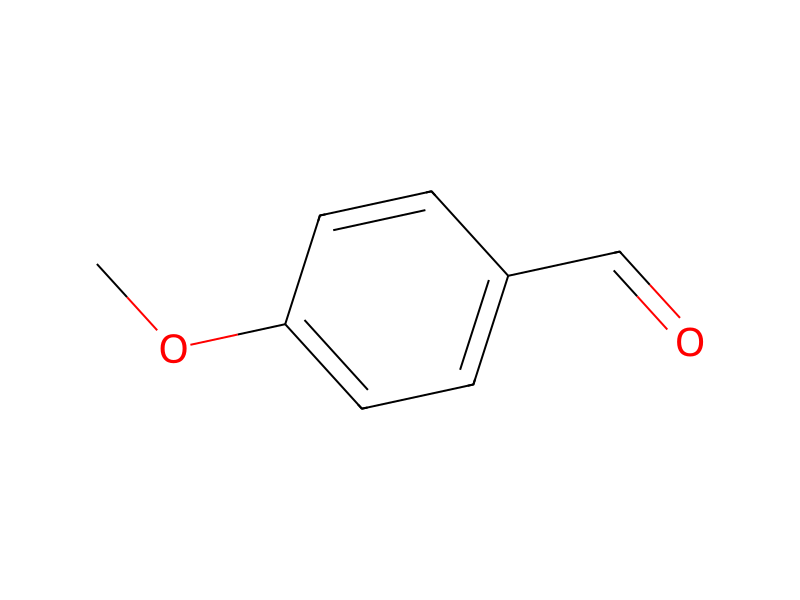
Product 1

Reagents, catalysts & solvents 1

Procedure
The reactions are carried out in a manner similar to Examples 1 to 19. However, water is added but no methanol. The starting material and reaction product and the blanketing stream of nitrogen are passed downward over the fixed-bed catalyst by the co-current method. With the aid of this downward-flow procedure, it is also possible to convert liquid phases. At 200° C., for example, the water will be in the form of steam but p-methoxybenzaldehyde (boiling point 248° C.) will still be substantially in the form of a liquid. In this case too, the desired p-hydroxybenzaldehyde is obtained.
Workup
- customThe starting material and reaction product
- customAt 200° C.
Sources & evidence
- ORD record
- ord-1bf930be29f44fc6971541e5f13391e8
- Source dataset
- uspto-grants-1990_10
- Patent number
- US04967013
Reaction notes
Loading…