Formic Acid → HCID 15034981, compound
Reaction equation

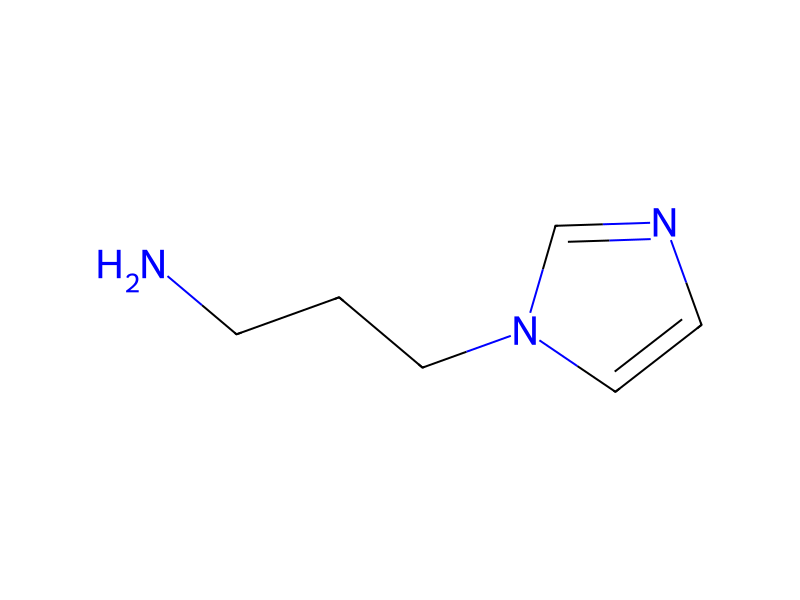
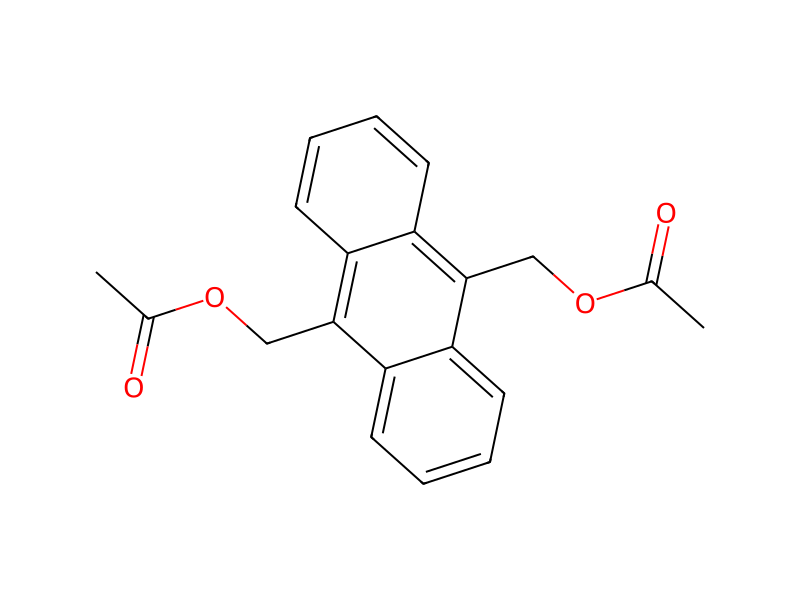
C(O[C:5](=[O:7])C)(=O)C.C(O)=O.CC(OCC1C2C(=CC=CC=2)C(COC(C)=O)=C2C=1C=CC=C2)=O.[N:35]1([CH2:40][CH2:41][CH2:42][NH2:43])[CH:39]=[CH:38][N:37]=[CH:36]1>O1CCCC1.O>[N:35]1([CH2:40][CH2:41][CH2:42][NH:43][CH:5]=[O:7])[CH:39]=[CH:38][N:37]=[CH:36]1Participants





Procedure
12.3 ml of acetic anhydride was cooled below 0° C. and treated dropwise with 6.1 ml of 98% formic acid, keeping the reaction temperature below 0° C. by external cooling. The mixture was then slowly warmed, and kept at 50° C.-60° C. for two hours. 10 ml of tetrahydrofuran was added, and the solution of acetic formic anhydric cooled to -20° C. A solution of 6.2 g of 3-(1H-imidazol-l-yl)propanamine in 20 ml of tetrahydrofuran was then added dropwise, keeping the temperature below -10° C. The reaction mixture was allowed to come to room temperature, 10 ml of water was added, and the mixture taken to dryness in vacuo. Distillation of the viscous residue at 195° C.-200° C. gave 6.2 g of N-(3-(1H-imidazol-l-yl)propyl)formamide. This was reduced to N-methyl-3-(1H-imidazol-l-yl)propylamine by the use of borane dimethylsulfide in refluxing tetrahydrofuran.
Workup
- customthe reaction temperature below 0° C.
- temperatureThe mixture was then slowly warmed
- customthe temperature below -10° C
- customto come to room temperature
- distillationDistillation of the viscous residue at 195° C.-200° C.
Sources & evidence
- ORD record
- ord-1715294bc1224094907545e09e8aea48
- Source dataset
- uspto-grants-1992_01
- Patent number
- US05081131
Reaction notes
Loading…