Triethylamine → tert-butyl N-(2-chloropyridin-4-yl)carbamate
Reaction equation

[C:1](OC([O-])=O)([O:3][C:4]([CH3:7])([CH3:6])[CH3:5])=[O:2].CN(C1C=CC=CN=1)C.[NH2:21][C:22]1[CH:27]=[CH:26][N:25]=[C:24]([Cl:28])[CH:23]=1.C(N(CC)CC)C>ClCCl.O>[Cl:28][C:24]1[CH:23]=[C:22]([NH:21][C:1](=[O:2])[O:3][C:4]([CH3:7])([CH3:6])[CH3:5])[CH:27]=[CH:26][N:25]=1Participants

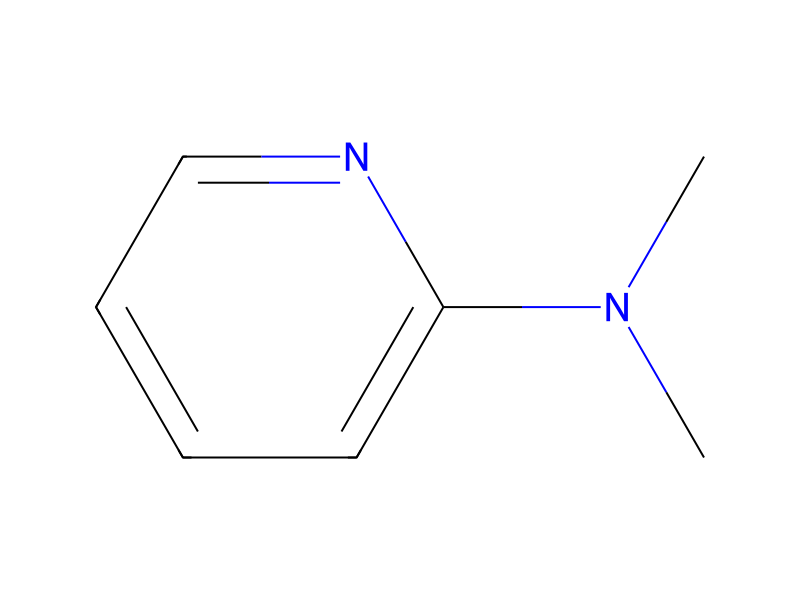




Procedure
1.69 g (7.78 mmol, 1 eq) of tert-butyl dicarbonate dissolved in 50 ml of dichloromethane, in the presence of 95 mg of dimethylaminopyridine, are added to a solution of 1 g (7.78 mmol, 1 eq) of 4-amino-2-chloropyridine in 30 mL of dichloromethane in the presence of 1.19 mL (1.19 mmol, 1.1 eq) of triethylamine. The reaction mixture is stirred overnight at room temperature. The reaction is stopped by adding 100 ml of water and is then extracted with dichloromethane. The organic phases are combined and dried over sodium sulfate. The solvents are evaporated off and the residue is then chromatographed on silica gel (70/30 to 50/50 heptane/ethyl acetate). The oil obtained is crystallized from pentane. 1.40 g of tert-butyl (2-chloropyrid-4-yl)carbamate are obtained. Yield=80%.
Workup
- extractionis then extracted with dichloromethane
- dry with materialdried over sodium sulfate
- customThe solvents are evaporated off
- customthe residue is then chromatographed on silica gel (70/30 to 50/50 heptane/ethyl acetate)
- customThe oil obtained
- customis crystallized from pentane
Sources & evidence
- ORD record
- ord-7ff335cb7e2243f9a969bfa6844ecf0c
- Source dataset
- uspto-grants-2012_03
- Patent number
- US08129416B2
Reaction notes
Loading…