3,4-dihydro-2H-pyran → 1-(t-Butyldimethylsilanyloxy)-3-chloro-2-(tetrahydropyran-2-yloxy)propane
Reaction equation

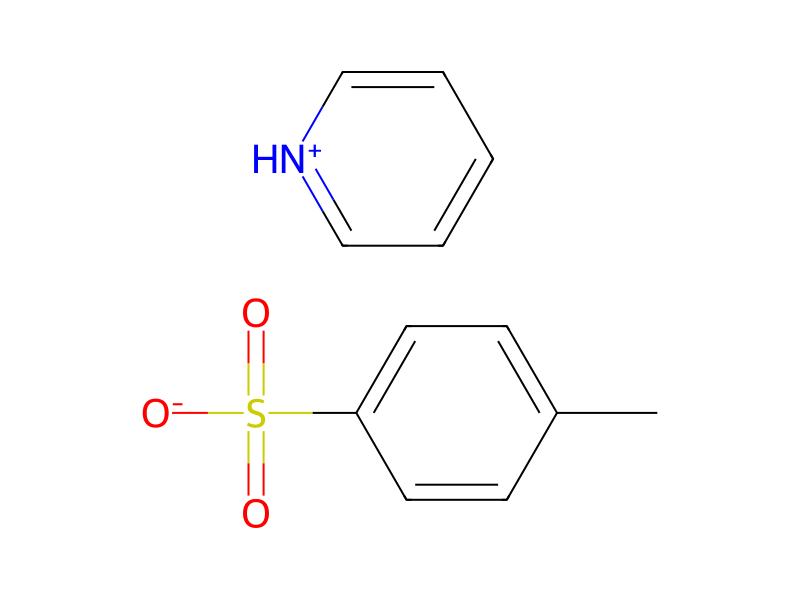
[Si:1]([O:8][CH2:9][C@@H:10]([OH:13])[CH2:11][Cl:12])([C:4]([CH3:7])([CH3:6])[CH3:5])([CH3:3])[CH3:2].[O:14]1[CH:19]=[CH:18][CH2:17][CH2:16][CH2:15]1.C1(C)C=CC(S([O-])(=O)=O)=CC=1.[NH+]1C=CC=CC=1>ClCCl>[Si:1]([O:8][CH2:9][CH:10]([O:13][CH:15]1[CH2:16][CH2:17][CH2:18][CH2:19][O:14]1)[CH2:11][Cl:12])([C:4]([CH3:7])([CH3:6])[CH3:5])([CH3:3])[CH3:2]Participants
5
Reactant 3


Product 1

Reagents, catalysts & solvents 1

Procedure
(R)-(−)-1-(tert-Butyldimethylsilanyloxy)-3-chloropropan-2-ol (11.19 g) prepared in reference example 31 was dissolved in dichloromethane (20 ml), then 3,4-dihydro-2H-pyran (5.87 ml) and pyridinium p-toluenesulfonate (catalytic amount) were added, then the reaction mixture was stirred at a room temperature overnight. The reaction mixture was concentrated under a reduced pressure, the residue was purified by use of a silica gel column chromatography (eluent: n-hexane/ethyl acetate=20/1), there was obtained 1-(t-butyldimethylsilanyloxy)-3-chloro-2-(tetrahydropyran-2-yloxy)propane (14.14 g, yield: 92.0%) as colorless liquid product.
Workup
- concentrationThe reaction mixture was concentrated under a reduced pressure
- customthe residue was purified by use of a silica gel column chromatography (eluent: n-hexane/ethyl acetate=20/1)
Sources & evidence
- ORD record
- ord-dd8e2739f23b42ff91b8935d2ff055d1
- Source dataset
- uspto-grants-2012_03
- Patent number
- US08129544B2
Reaction notes
Loading…