Sodium Carbonate → 4-Dimethylamino-1-(3-methyl-1H-pyrrolo[2,3-b]pyridin-2-yl)-4-phenylcyclohexanol
Reaction equation

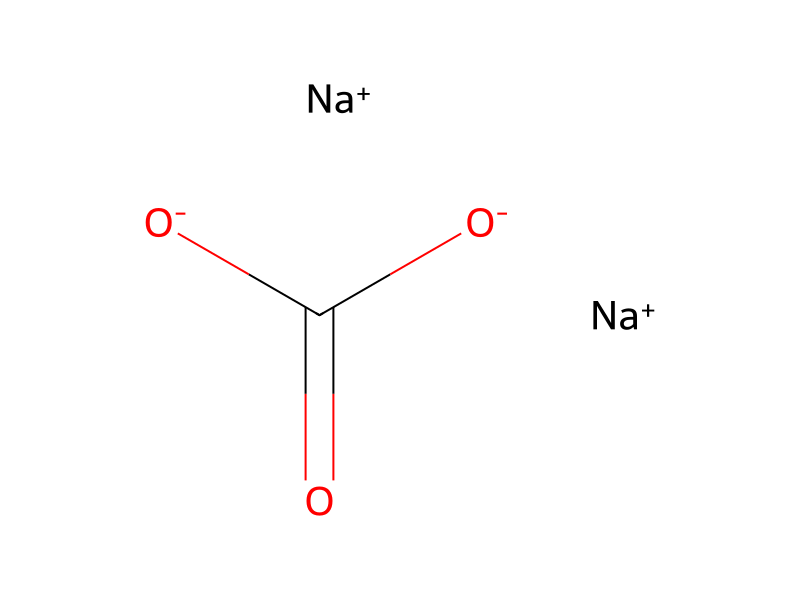
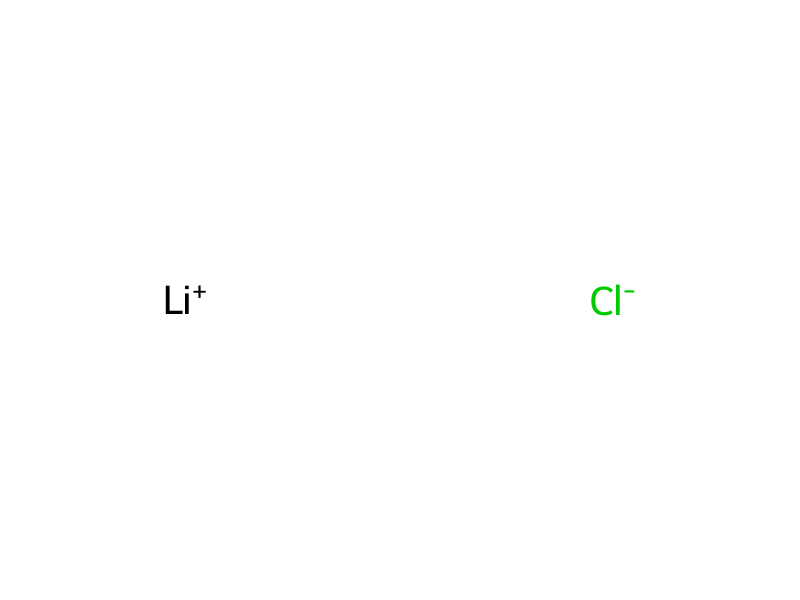
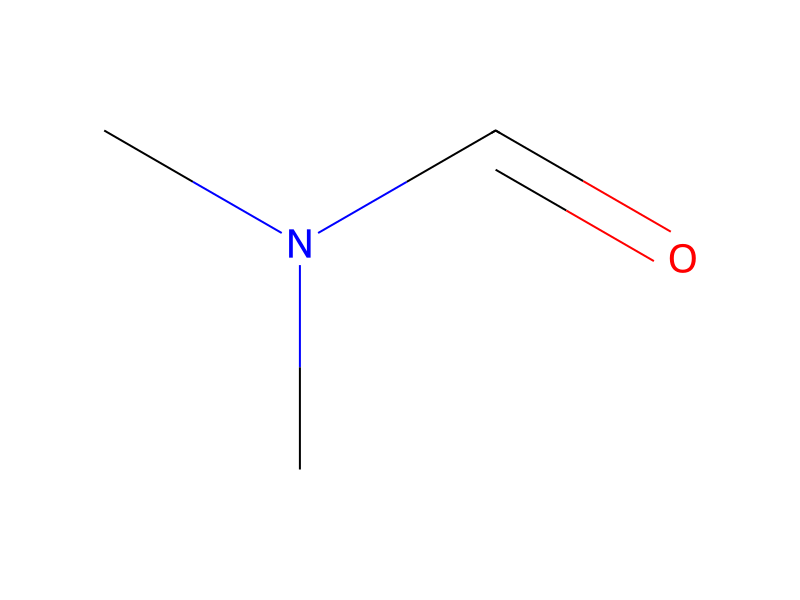
[NH2:1][C:2]1[C:7](I)=[CH:6][CH:5]=[CH:4][N:3]=1.[CH3:9][N:10]([CH3:27])[C:11]1([C:21]2[CH:26]=[CH:25][CH:24]=[CH:23][CH:22]=2)[CH2:16][CH2:15][C:14]([C:18]#[C:19][CH3:20])([OH:17])[CH2:13][CH2:12]1.[Cl-].[Li+].C(=O)([O-])[O-].[Na+].[Na+]>CN(C)C=O.C1C=CC(P(C2C=CC=CC=2)[C-]2C=CC=C2)=CC=1.C1C=CC(P(C2C=CC=CC=2)[C-]2C=CC=C2)=CC=1.Cl[Pd]Cl.[Fe+2].C(Cl)Cl.O>[CH3:27][N:10]([CH3:9])[C:11]1([C:21]2[CH:26]=[CH:25][CH:24]=[CH:23][CH:22]=2)[CH2:16][CH2:15][C:14]([C:18]2[NH:1][C:2]3=[N:3][CH:4]=[CH:5][CH:6]=[C:7]3[C:19]=2[CH3:20])([OH:17])[CH2:13][CH2:12]1Participants
Reactant 4


Product 1

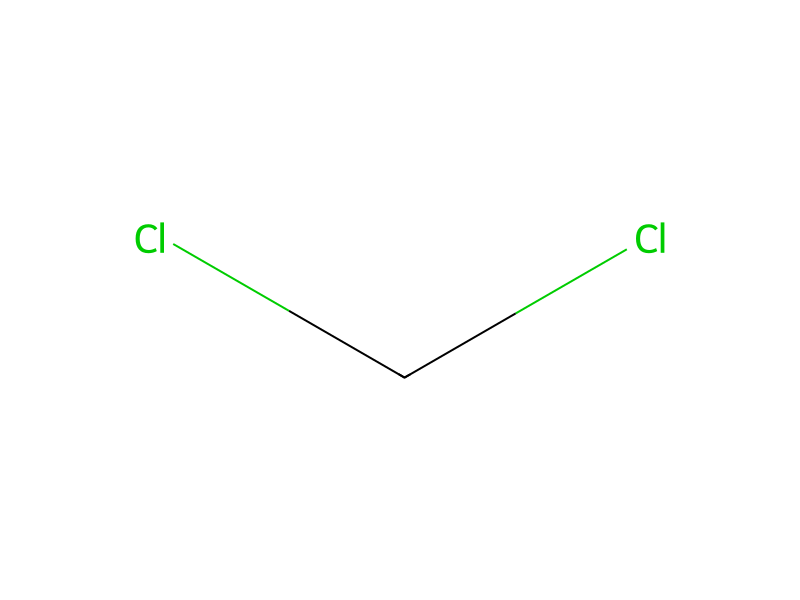
Reagents, catalysts & solvents 4

Conditions
- Temperature
- 79 °C
Procedure
2-Amino-3-iodopyridine (3,108 mg, 14.13 mmol), 4-(dimethylamino)-4-phenyl-1-(prop-1-ynyl)cyclohexanol (4,000 mg, 15.54 mmol), lithium chloride (630 mg, 14.83 mmol) and sodium carbonate (4.49 g, 42.38 mmol) were combined in dimethylformamide (absolute, 60 ml) in an argon atmosphere. The catalyst ([Pd(dppf)Cl2×CH2Cl2], 1,154 mg, 1.41 mmol) was then added. The red solution was heated at 79° C. (oil bath temperature) for 5 h. To bring the reaction to completion, a further 0.3 equivalent of 2-amino-3-iodopyridine (932 mg, 4.24 mmol) and 0.05 equivalent of catalyst (577 mg, 0.71 mmol) were added. Thereafter, the mixture was stirred at 99° C. (oil bath temperature) for a further 2 h. The black reaction mixture was cooled to room temperature and water (50 ml; stirring for 10 min) and methylene chloride (50 ml) were added in succession. The phases were separated (the mixture was filtered over kieselguhr) and the aqueous phase was extracted with methylene chloride (3×20 ml). The combined organic phases were washed with saturated NaCl solution (3×20 ml) and dried over sodium sulfate. After filtration, the volatile constituents were removed completely in vacuo. The residue was absorbed on kieselguhr and separated by chromatography (silica gel [200 g]; chloroform/ethanol [9:1 1,000 ml]). 1,200 mg (3.43 mmol; 22% of the non-polar diastereomer were isolated as a colourless solid.
Workup
- customthe reaction to completion
- customThe black reaction mixture
- temperaturewas cooled to room temperature
- customThe phases were separated (the mixture
- filtrationwas filtered over kieselguhr) and the aqueous phase
- extractionwas extracted with methylene chloride (3×20 ml)
- washThe combined organic phases were washed with saturated NaCl solution (3×20 ml)
- dry with materialdried over sodium sulfate
- filtrationAfter filtration
- customthe volatile constituents were removed completely in vacuo
- customThe residue was absorbed on kieselguhr
- customseparated by chromatography (silica gel [200 g]; chloroform/ethanol [9:1 1,000 ml])
- custom22% of the non-polar diastereomer were isolated as a colourless solid
Sources & evidence
- ORD record
- ord-dc0a07f729714838a71cb04b4e193a41
- Source dataset
- uspto-grants-2012_03
- Patent number
- US08138187B2
Reaction notes
Loading…