Sodium Chloride → 4-(dimethylamino)-4-phenyl-1-(3-(3-(tetrahydro-2H-pyran-2-yloxy)propyl)-1H-pyrrolo[2,3-b]pyridin-2-yl)cyclohexanol
반응식

[CH3:1][N:2]([CH3:28])[C:3]1([C:22]2[CH:27]=[CH:26][CH:25]=[CH:24][CH:23]=2)[CH2:8][CH2:7][C:6]([C:10]#[C:11][CH2:12][CH2:13][CH2:14][O:15][CH:16]2[CH2:21][CH2:20][CH2:19][CH2:18][O:17]2)([OH:9])[CH2:5][CH2:4]1.[NH2:29][C:30]1[C:35](I)=[CH:34][CH:33]=[CH:32][N:31]=1.[Cl-].[Li+].C(=O)([O-])[O-].[Na+].[Na+].[Cl-].[Na+]>CN(C)C=O.C1C=CC(P(C2C=CC=CC=2)[C-]2C=CC=C2)=CC=1.C1C=CC(P(C2C=CC=CC=2)[C-]2C=CC=C2)=CC=1.Cl[Pd]Cl.[Fe+2].C(Cl)Cl.O>[CH3:28][N:2]([CH3:1])[C:3]1([C:22]2[CH:23]=[CH:24][CH:25]=[CH:26][CH:27]=2)[CH2:4][CH2:5][C:6]([C:10]2[NH:29][C:30]3=[N:31][CH:32]=[CH:33][CH:34]=[C:35]3[C:11]=2[CH2:12][CH2:13][CH2:14][O:15][CH:16]2[CH2:21][CH2:20][CH2:19][CH2:18][O:17]2)([OH:9])[CH2:7][CH2:8]1참가 물질
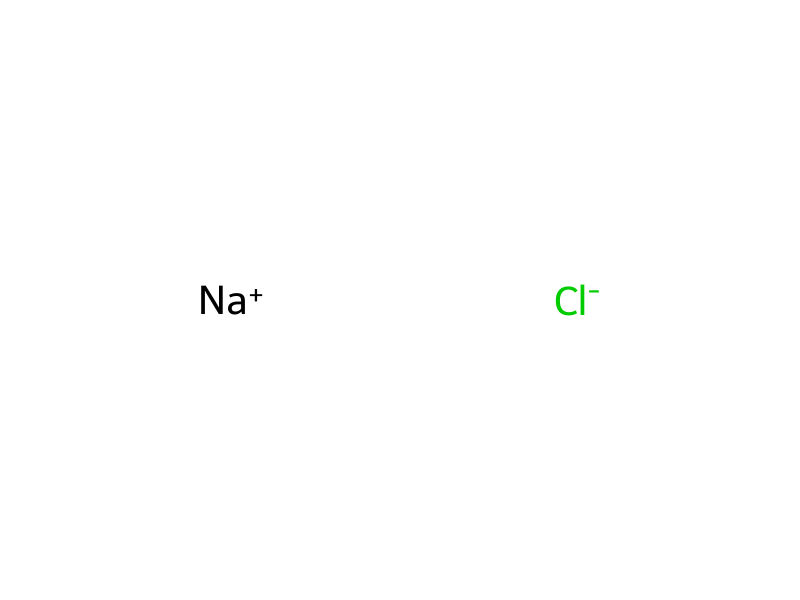
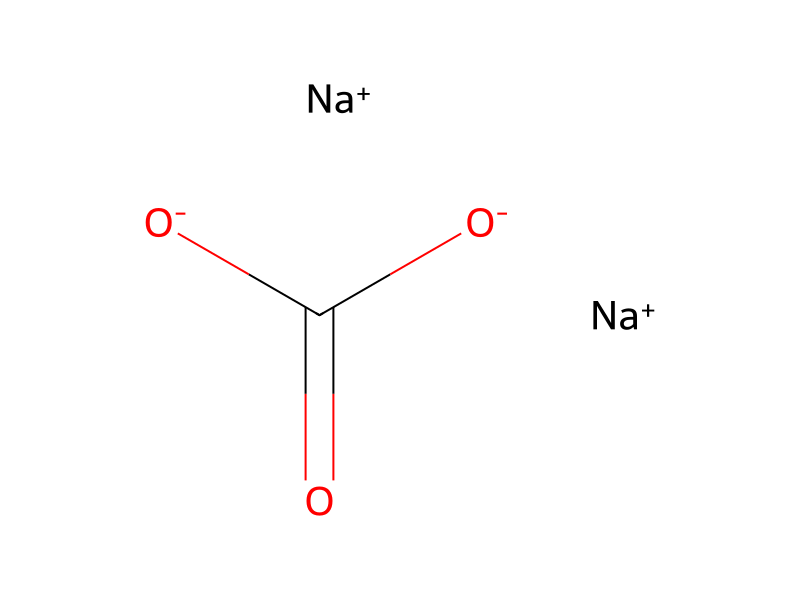
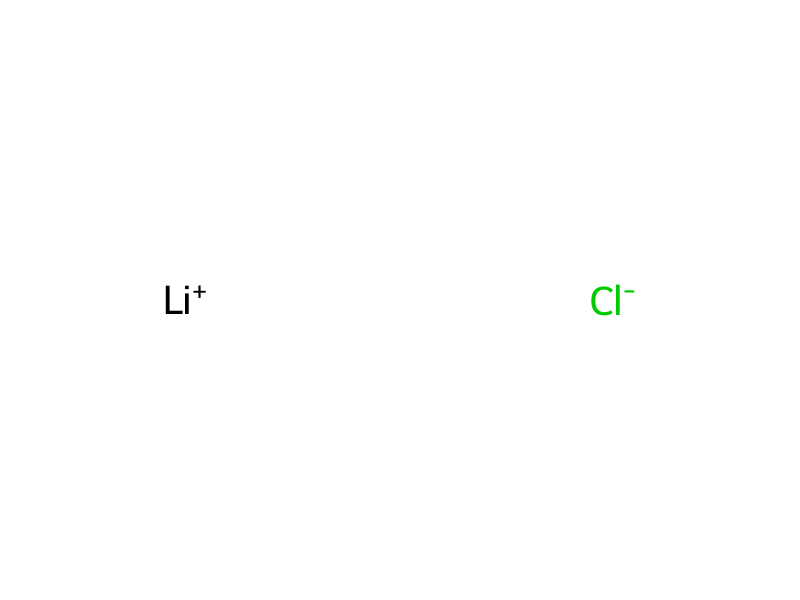
반응물 5


생성물 1

시약·촉매·용매 4

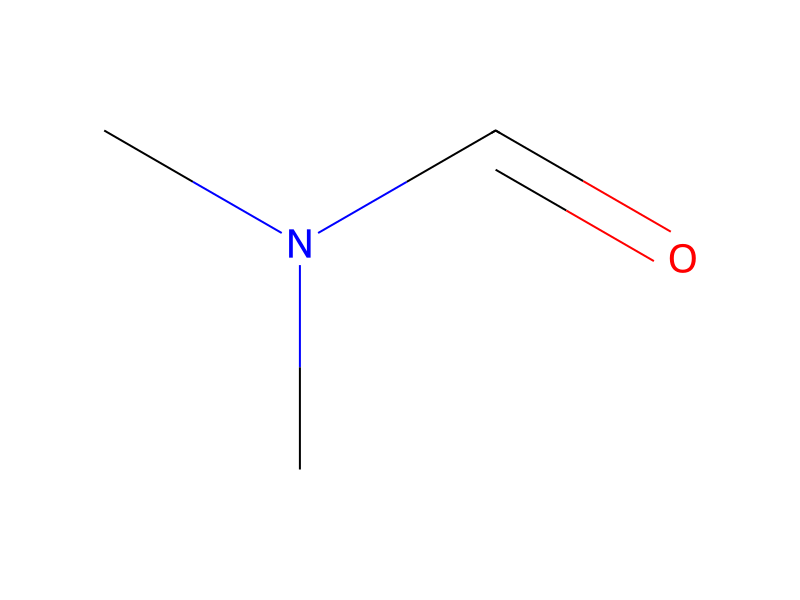
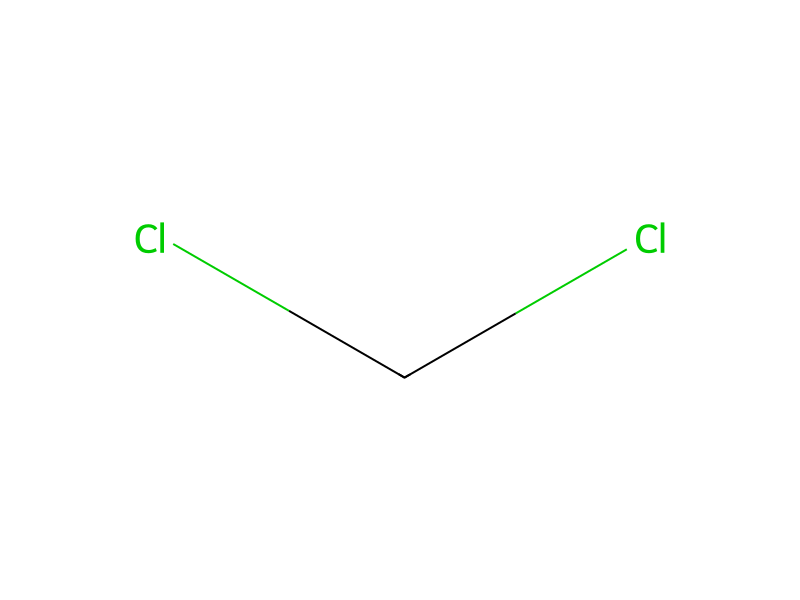
반응 조건
- 온도
- 105 °C
실험 절차
4-(Dimethylamino)-4-phenyl-1-(5-(tetrahydro-2H-pyran-2-yloxy)pent-1-ynyl)cyclohexanol (700 mg, 1.82 mmol), 2-amino-3-iodopyridine (363 mg, 1.65 mmol), lithium chloride (74 mg, 1.73 mmol) and sodium carbonate (525 mg, 4.95 mmol) was dissolved in dimethylformamide (20 ml) under an argon atmosphere. Argon was subsequently allowed to flow through the solution for 10 min and the catalyst ([Pd(dppf)Cl2×CH2Cl2], 135 mg, 0.17 mmol) was then added. The reaction mixture was heated at 105° C. (oil bath temperature) for 3 h. A TLC showed that the starting substances had been used up completely. The black reaction mixture was cooled to room temperature and water (50 ml; stirring for 10 min), methylene chloride (50 ml) and saturated sodium chloride solution (for phase separation, 80 ml) were added in succession. The phases were separated and the aqueous phase was extracted with methylene chloride (3×20 ml). The combined organic phases were washed with water (20 ml) and with saturated sodium chloride solution (3×20 ml), dried over sodium sulfate and filtered and the volatile constituents were then removed completely in vacuo. The residue was separated by chromatography [silica gel 60 (200 g); chloroform/ethanol 19:1 (500 ml), 9:1 (500 ml), 4:1 (500 ml), methanol (1,000 ml)]. It was possible to obtain a diastereoisomer of the alcohol (4-(dimethylamino)-4-phenyl-1-(3-(3-(tetrahydro-2H-pyran-2-yloxy)propyl)-1H-pyrrolo[2,3-b]pyridin-2-yl)cyclohexanol) (m.p.: 238° C.) in a yield of 28% (221 mg, 0.46 mmol) as a white powder.
후처리
- customThe black reaction mixture
- temperaturewas cooled to room temperature
- customThe phases were separated
- extractionthe aqueous phase was extracted with methylene chloride (3×20 ml)
- washThe combined organic phases were washed with water (20 ml) and with saturated sodium chloride solution (3×20 ml)
- dry with materialdried over sodium sulfate
- filtrationfiltered
- customthe volatile constituents were then removed completely in vacuo
- customThe residue was separated by chromatography [silica gel 60 (200 g); chloroform/ethanol 19:1 (500 ml), 9:1 (500 ml), 4:1 (500 ml), methanol (1,000 ml)]
출처 및 근거
- ORD 기록
- ord-93b958b1e41240999af54b7976e830c9
- 출처 데이터셋
- uspto-grants-2012_03
- 특허 번호
- US08138187B2
반응 노트
불러오는 중…