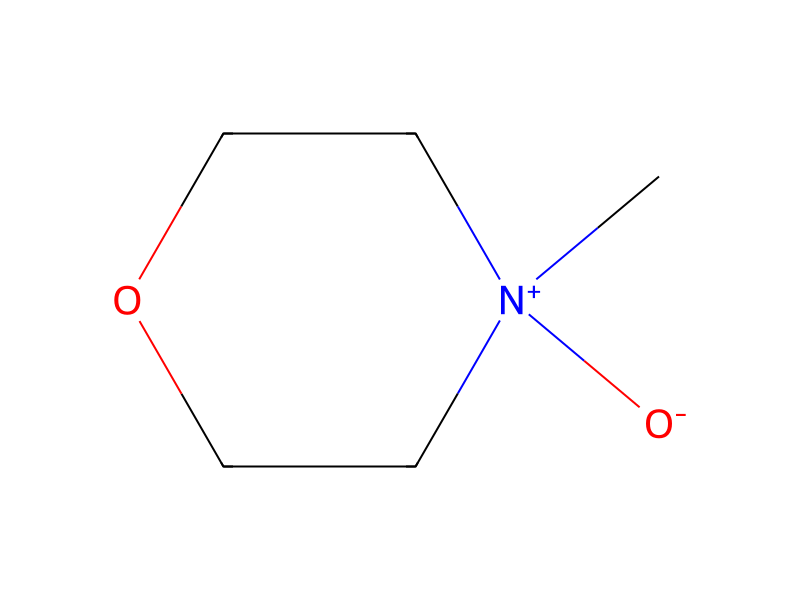
Methyl morpholine oxide → HCID 12160525, compound
Reaction equation

[CH:1]1[C:10]2[C:5](=[CH:6][CH:7]=[CH:8][CH:9]=2)[CH:4]=[CH:3][C:2]=1[C:11]#[C:12][CH2:13][OH:14].C[N+]1([O-])CCOCC1.C(=O)(O)[O-].[Na+]>C([N+](CCC)(CCC)CCC)CC.ClCCl>[CH:1]1[C:10]2[C:5](=[CH:6][CH:7]=[CH:8][CH:9]=2)[CH:4]=[CH:3][C:2]=1[C:11]#[C:12][CH:13]=[O:14]Participants




Procedure
3-(Naphthalen-2-yl)prop-2-yn-1-ol (2.48 g, 13.6 mmol), tetrapropylammonium perruthanate (0.09 g, 0.27 mmol, 2 mol %), and dichloromethane (150 mL) were stirred under nitrogen at 0° C. A portion of N-methylmorpholine-N-oxide (2.87 g, 245 mmol) was added and the reaction was stirred at room temperature for 1 h. The remaining N-methylmorpholine-N-oxide was then added over 3 h at room temperature and the reaction stirred for a further 1 hour. Saturated sodium bicarbonate (75 mL) was added and the mixture was extracted with dichloromethane (3×75 mL), dried over sodium sulphate filtered and concentrated in vacuo to afford the desired compound (2.45 g, 81%) as a brown solid. 1H NMR (400 MHz, CDCl3) δ ppm 7.47-7.54 (4H, m, ArH), 7.77-7.87 (3H, m, ArH), 8.19 (1H, s, ArH), 9.48 (1H, s, CHO).
Workup
- stirringthe reaction stirred for a further 1 hour
- extractionthe mixture was extracted with dichloromethane (3×75 mL)
- dry with materialdried over sodium sulphate
- filtrationfiltered
- concentrationconcentrated in vacuo
Sources & evidence
- ORD record
- ord-d0e07ff0f3f04e4cadba22b9577f4b16
- Source dataset
- uspto-grants-2012_03
- Patent number
- US08138377B2
Reaction notes
Loading…