p-Bromochlorobenzene → 4-Chlorobiphenyl
Reaction equation

[C:1]1([Mg]Cl)[CH:6]=[CH:5][CH:4]=[CH:3][CH:2]=1.O1CCCC1.[CH:14]1[C:19]([Cl:20])=[CH:18][CH:17]=[C:16](Br)[CH:15]=1>O1CCCC1.C1C=CC(P(C2C=CC=CC=2)[C-]2C=CC=C2)=CC=1.C1C=CC(P(C2C=CC=CC=2)[C-]2C=CC=C2)=CC=1.Cl[Pd]Cl.[Fe+2]>[Cl:20][C:19]1[CH:18]=[CH:17][C:16]([C:1]2[CH:6]=[CH:5][CH:4]=[CH:3][CH:2]=2)=[CH:15][CH:14]=1Participants
5
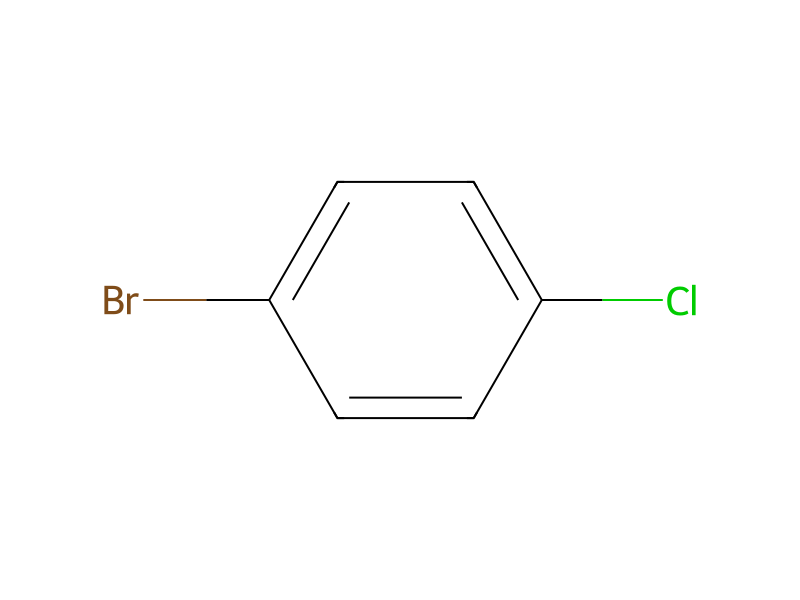

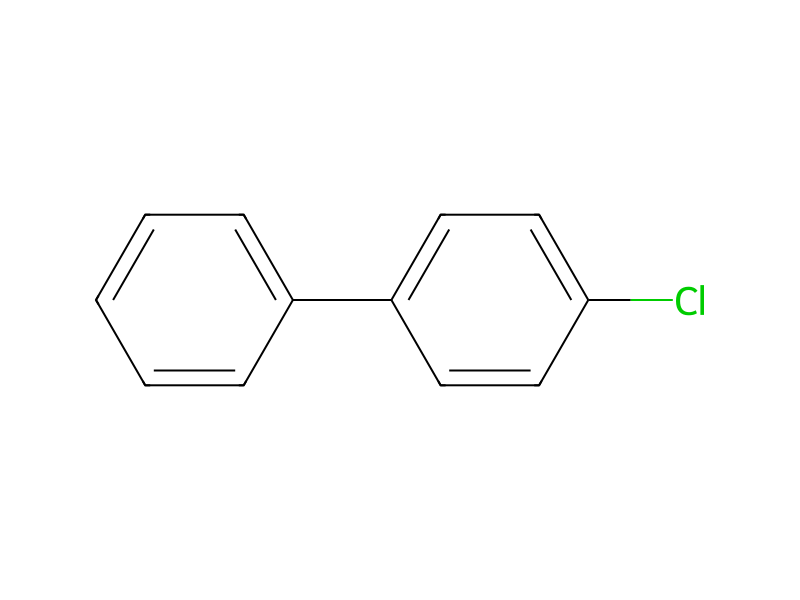


Procedure
6 mol of a 26% strength by weight phenylmagnesium chloride/THF solution are added dropwise in the course of 4 hours to a boiling solution of 6 mol of 1,4-bromochlorobenzene and 100 mg of Pd(dppf)Cl2 *CH2Cl2 in 600 g of tetrahydrofuran (THF). After completion of the addition, the reaction mixture is refluxed for a further 5 hours. After hydrolysis with 3600 g of 8% strength by weight sulfuric acid, phase separation and subsequent removal of the solvent by distillation, crude 4-chlorobiphenyl is obtained, which is purified by fractional distillation in vacuo. Yield 1080 g (96%), purity of the product □ 99.7% (a/a GC).
Workup
- additionAfter completion of the addition
- temperaturethe reaction mixture is refluxed for a further 5 hours
- customAfter hydrolysis with 3600 g of 8% strength
- customby weight sulfuric acid, phase separation and subsequent removal of the solvent
- distillationby distillation
Sources & evidence
- ORD record
- ord-dfb457085d52422b87da496963d25b5b
- Source dataset
- uspto-grants-2000_05
- Patent number
- US06066766
Reaction notes
Loading…