Triethylamine → HCID 15227587, compound
Reaction equation

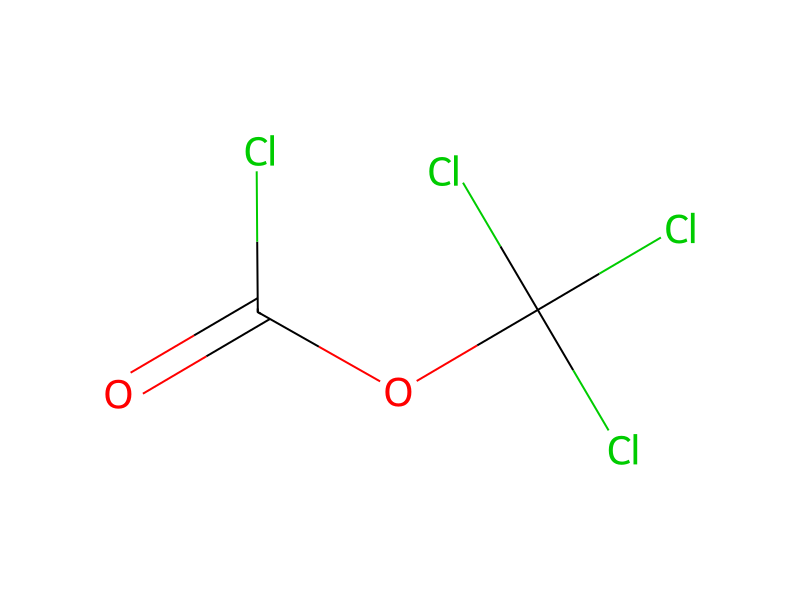
Cl[C:2]([O:4][C:5](Cl)(Cl)Cl)=[O:3].[Cl:9][C:10]1[CH:11]=[CH:12][C:13]2[O:17][N:16]=[C:15]([O:18][CH2:19][CH:20]([OH:23])CO)[C:14]=2[CH:24]=1.C([N:27](CC)CC)C>C1C=CC=CC=1>[C:2]([O:4][CH2:5][CH:20]([OH:23])[CH2:19][O:18][C:15]1[C:14]2[CH:24]=[C:10]([Cl:9])[CH:11]=[CH:12][C:13]=2[O:17][N:16]=1)(=[O:3])[NH2:27]Participants
Reactant 3


Product 1

Reagents, catalysts & solvents 1

Conditions
- Temperature
- 10 °C
Procedure
5.9 g (29.8 mmoles) of trichloromethyl chloroformate were added dropwise at 10° C. to a solution of 16.0 g (55.8 mmoles) of 5-chloro-3-(2,3-dihydroxypropoxy)-1,2-benzisoxazole [prepared as described in step (a) above] in 500 ml of dry benzene; the mixture was then stirred at the same temperature for 30 minutes, after which 6.1 g (60.3 mmoles) of triethylamine were added dropwise at 10°-15° C. The mixture was then stirred for a further 1 hour at 5°-10° C., after which insoluble materials were removed by filtration and washed with 100 ml of dry benzene. The filtrate and washings were combined, and cooled to 10° C., and then 38.0 ml (304.0 mmoles) of 28% v/v aqueous ammonia were added thereto at one time. The mixture was then stirred at room temperature for 2 hours, after which it was heated under reflux for an additional 2 hours. The reaction mixture was then concentrated by evaporation under reduced pressure, and 38.0 ml (304.0 mmoles) of 28% v/v aqueous ammonia and 200 ml of ethanol were added to the residue. The resulting mixture was then heated under reflux for a further 2 hours. At the end of this time, the reaction mixture was cooled by allowing it to stand, and the cooled mixture was then concentrated by evaporation under reduced pressure. The residue was purified by column chromatography through silica gel, eluted with a 1:2 by volume mixture of benzene and ethyl acetate, followed by recrystallization from ethyl acetate, to give 11.6 g (72.5%) of the title compound as a colorless amorphous powder, melting at 123°-124° C.
Workup
- stirringThe mixture was then stirred for a further 1 hour at 5°-10° C.
- customafter which insoluble materials were removed by filtration
- washwashed with 100 ml of dry benzene
- addition38.0 ml (304.0 mmoles) of 28% v/v aqueous ammonia were added
- stirringThe mixture was then stirred at room temperature for 2 hours
- temperatureafter which it was heated
- temperatureunder reflux for an additional 2 hours
- concentrationThe reaction mixture was then concentrated by evaporation under reduced pressure, and 38.0 ml (304.0 mmoles) of 28% v/v aqueous ammonia and 200 ml of ethanol
- additionwere added to the residue
- temperatureThe resulting mixture was then heated
- temperatureunder reflux for a further 2 hours
- temperatureAt the end of this time, the reaction mixture was cooled
- concentrationthe cooled mixture was then concentrated by evaporation under reduced pressure
- customThe residue was purified by column chromatography through silica gel
- washeluted with a 1:2 by volume mixture of benzene and ethyl acetate
- customfollowed by recrystallization from ethyl acetate
Sources & evidence
- ORD record
- ord-379eabd126034c7f8241a088aa2eba8c
- Source dataset
- uspto-grants-1994_06
- Patent number
- US05321037
Reaction notes
Loading…