2,3-Dihydrofuran → HCID 19019067, compound
Reaction equation

[OH:1][C:2]1[CH:3]=[C:4]([CH:7]=[CH:8][C:9]=1[OH:10])[CH:5]=[CH2:6].[O:11]1[CH:15]=[CH:14][CH2:13][CH2:12]1>Cl.C(OCC)C>[O:11]1[CH2:12][CH2:13][CH2:14][CH:15]1[O:1][C:2]1[CH:3]=[C:4]([CH:7]=[CH:8][C:9]=1[O:10][CH:12]1[CH2:13][CH2:14][CH2:15][O:11]1)[CH:5]=[CH2:6]Participants
5
Reactant 2
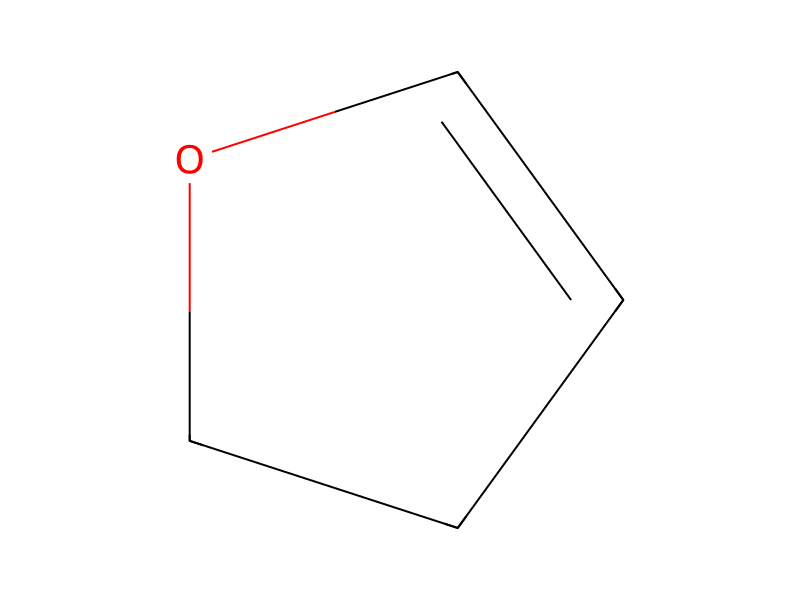

Product 1

Reagents, catalysts & solvents 2


Conditions
- Temperature
- 50 °C
Procedure
To 38.1 g (0.28 mol) of 3,4-dihydroxystyrene and 118 g (1.68 mol) of 2,3-dihydrofuran are added 5 drops of concentrated hydrochloric acid, whereupon an exothermic reaction ensues. The solution is stirred for 4 h at 50° C. and then poured on to a mixture of ice-water and diethyl ether. After two extractions with diethyl ether, the organic phase is washed three times at 0° C. with 1N NaOH and dried over Na2SO4. The solvent is removed by evaporation to leave a clear liquid which is purified by distillation in a bulb tube (155° C./0.02 torr) or by column chromatography (silica gel, hexane/ethyl acetate 4:1).
Workup
- customwhereupon an exothermic reaction
- extractionAfter two extractions with diethyl ether
- washthe organic phase is washed three times at 0° C. with 1N NaOH
- dry with materialdried over Na2SO4
- customThe solvent is removed by evaporation
- customto leave a clear liquid which
- distillationis purified by distillation in a bulb tube (155° C./0.02 torr)
Sources & evidence
- ORD record
- ord-e92d55000f9145878b4ca5da59696b86
- Source dataset
- uspto-grants-1994_06
- Patent number
- US05324804
Reaction notes
Loading…