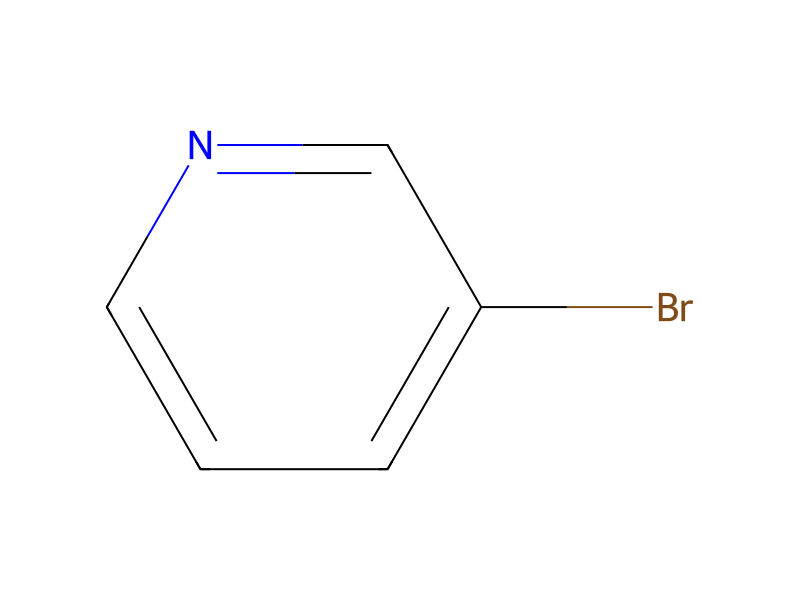
3-Bromopyridine → HCID 15045442, compound
Reaction equation

Br[C:2]1[CH:3]=[N:4][CH:5]=[CH:6][CH:7]=1.C([Li])CCC.[N:13]1[CH:18]=[CH:17][CH:16]=[CH:15][C:14]=1[N:19]1[CH2:24][CH2:23][N:22]([CH:25]2[CH2:30][CH2:29][C:28](=[O:31])[CH2:27][CH2:26]2)[CH2:21][CH2:20]1>C(OCC)C.O1CCCC1>[N:4]1[CH:5]=[CH:6][CH:7]=[C:2]([C:28]2([OH:31])[CH2:29][CH2:30][CH:25]([N:22]3[CH2:23][CH2:24][N:19]([C:14]4[CH:15]=[CH:16][CH:17]=[CH:18][N:13]=4)[CH2:20][CH2:21]3)[CH2:26][CH2:27]2)[CH:3]=1Participants
Reactant 3


Product 1

Reagents, catalysts & solvents 2


Procedure
A solution of 4.74 g (30 mmol) of 3-bromopyridine in 100 ml of diethyl ether is cooled to --78° C. under a nitrogen atmosphere. n-Butyllithium (18.75 ml, 30 mmol) is added dropwise. The resulting suspension is stirred for 30 minutes. To this solution is added a solution of 5.19 g of 4-[4-(2-pyridinyl)-1-piperazinyl]cyclohexanone in 175 ml of tetrahydrofuran dropwise. The cold bath is removed and the mixture is allowed to warm to room temperature and quenched with 50 ml of saturated ammonium chloride solution. The tetrahydrofuran is evaporated under vacuum and the residue is partitioned into water/dichloromethane. The organic phase is separated and dried over magnesium sulfate and evaporated in vacuo to give the title compound as a mixture of cis and trans isomers.
Workup
- customThe cold bath is removed
- customquenched with 50 ml of saturated ammonium chloride solution
- customThe tetrahydrofuran is evaporated under vacuum
- customthe residue is partitioned into water/dichloromethane
- customThe organic phase is separated
- dry with materialdried over magnesium sulfate
- customevaporated in vacuo
Sources & evidence
- ORD record
- ord-d212eec3fe5f435fa37a52fed8a5380d
- Source dataset
- uspto-grants-1990_12
- Patent number
- US04975445
Reaction notes
Loading…