3-Chloro-2-methylbenzaldehyde → 3-Chloro-2-methylstyrene
Reaction equation

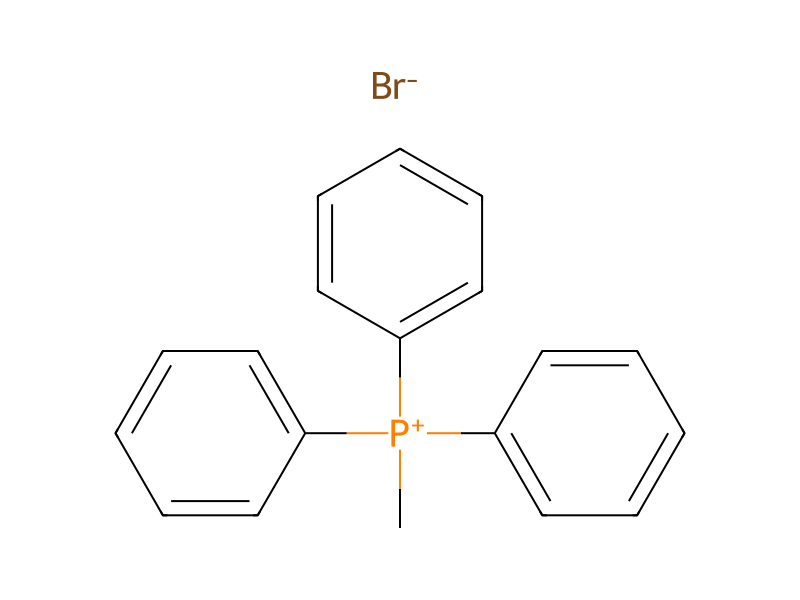
[CH2:1]([Li])CCC.[Cl:6][C:7]1[C:8]([CH3:15])=[C:9]([CH:12]=[CH:13][CH:14]=1)[CH:10]=O>[Br-].C[P+](C1C=CC=CC=1)(C1C=CC=CC=1)C1C=CC=CC=1.O1CCCC1.CCCCCC>[Cl:6][C:7]1[C:8]([CH3:15])=[C:9]([CH:12]=[CH:13][CH:14]=1)[CH:10]=[CH2:1]Participants
6





Conditions
- Temperature
- -40 °C
Procedure
Methyltriphenylphosphonium bromide (6.9 g, 0.019M) was suspended in dry tetrahydrofuran (100 ml) at -40° C. under an atmosphere of dry nitrogen. n-Butyllithium (13.5 ml. of a 1.55M solution in hexane, 0.021M) was added dropwise during 10 minutes and the mixture was stirred at -40° C. for 30 minutes. 3-Chloro-2-methylbenzaldehyde (3.0 g, 0.019M) in dry tetrahydrofuran (10 mls) was then added. The mixture was maintained at -40° C. for 30 minutes and then allowed to warm to room temperature. Hexane (150 ml) was added and the mixture was filtered. The hexane was evaporated to give crude 3-chloro-2-methylstyrene which was used directly without further purification.
Workup
- temperatureThe mixture was maintained at -40° C. for 30 minutes
- temperatureto warm to room temperature
- filtrationthe mixture was filtered
- customThe hexane was evaporated
Sources & evidence
- ORD record
- ord-2ea94fca2e0e422e9043c2042717ee12
- Source dataset
- uspto-grants-1984_12
- Patent number
- US04489083
Reaction notes
Loading…