Ethyl butyrate → Ethyl 3-phenylprop-2-enoate
Reaction equation

O1[CH2:6][CH2:5]OCC1.[C:7]([O:12][CH2:13][CH3:14])(=[O:11])[CH2:8][CH2:9][CH3:10].[C:15](#N)[CH2:16][CH3:17].C(=O)(OCC)OCC>C1(C)C=CC=CC=1.CN(C)C=O.C(O)(C)(C)C.C1CCCCC1.ClC1C=CC=CC=1>[C:7]([O:12][CH2:13][CH3:14])(=[O:11])[CH:8]=[CH:9][C:10]1[CH:6]=[CH:5][CH:17]=[CH:16][CH:15]=1Participants
10
Reactant 4

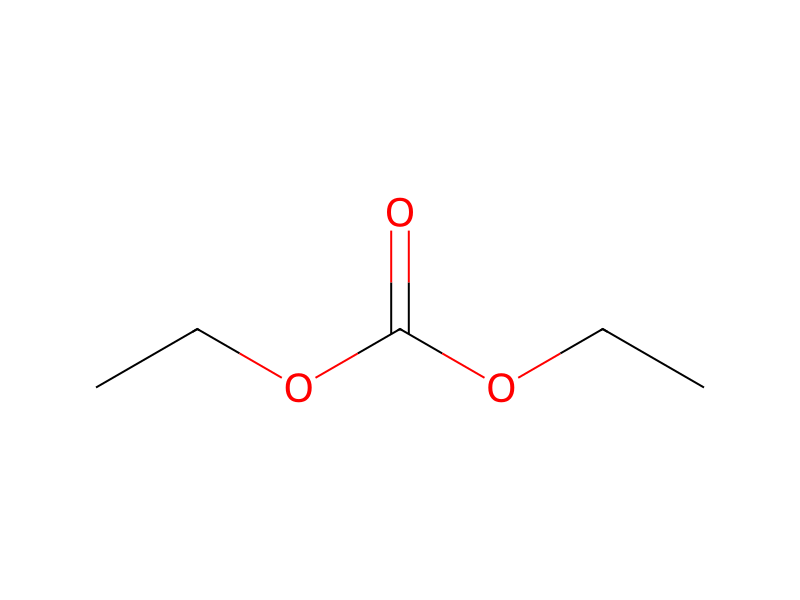


Product 1

Reagents, catalysts & solvents 5





Procedure
The procedure described in Example 1 is repeated, except that (a) 50 ml of dioxane, (b) 50 ml of ethyl butyrate, (c) 50 ml of propionitrile, (d) 50 ml of diethyl carbonate, (e) 50 ml of chlorobenzene, (f) 50 ml of cyclohexane, (g) 50 ml of tert.-butanol or (h) 50 ml of N,N-dimethylformamide are used in place of 50 ml of toluene. After working up as described in Example 1, ethyl cinnamate is obtained in comparably good yields.
Sources & evidence
- ORD record
- ord-f677d2e173534c69bf65401ab2527651
- Source dataset
- uspto-grants-1982_06
- Patent number
- US04335054
Reaction notes
Loading…