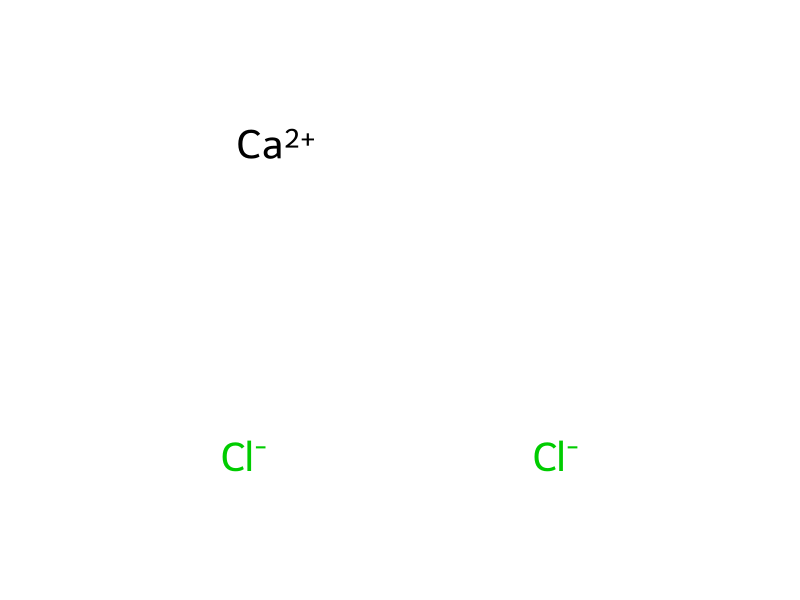
Calcium Chloride → HCID 86738455, compound
Reaction equation

[Cl-].[Ca+2:2].[Cl-].[Cl:4][C:5]1[CH:6]=[C:7]([CH:19]=[CH:20][CH:21]=1)[O:8][CH2:9][CH2:10][CH2:11][CH2:12][C:13]1([C:16]([O-:18])=[O:17])[CH2:15][O:14]1.[Na+]>O>[Cl:4][C:5]1[CH:6]=[C:7]([CH:19]=[CH:20][CH:21]=1)[O:8][CH2:9][CH2:10][CH2:11][CH2:12][C:13]1([C:16]([O-:18])=[O:17])[CH2:15][O:14]1.[Ca+2:2].[Cl:4][C:5]1[CH:6]=[C:7]([CH:19]=[CH:20][CH:21]=1)[O:8][CH2:9][CH2:10][CH2:11][CH2:12][C:13]1([C:16]([O-:18])=[O:17])[CH2:15][O:14]1Participants
4
Reactant 2

Product 1

Reagents, catalysts & solvents 1

Procedure
400 mg of calcium chloride in 5 ml of water are added to a solution of 1 g of sodium 2-[4-(3-chlorophenoxy)butyl]oxirane-2-carboxylate in 10 ml of water. The greasy residue which has formed is separated off by decantation, and the sediment is washed by two decantations with little water. The residue is dried over phosphorus pentoxide. 840 mg of the title compound are obtained. Decomposition (without melting) at 225° C.
Workup
- customThe greasy residue which has formed
- customis separated off by decantation
- washthe sediment is washed by two decantations with little water
- dry with materialThe residue is dried over phosphorus pentoxide
Sources & evidence
- ORD record
- ord-be105c0303754d5a83be07bbdc85062b
- Source dataset
- uspto-grants-1982_06
- Patent number
- US04337267
Reaction notes
Loading…