Dimethyl Sulfoxide → 1-(4-Chlorophenyl)isoquinoline-5-acetonitrile
Reaction equation

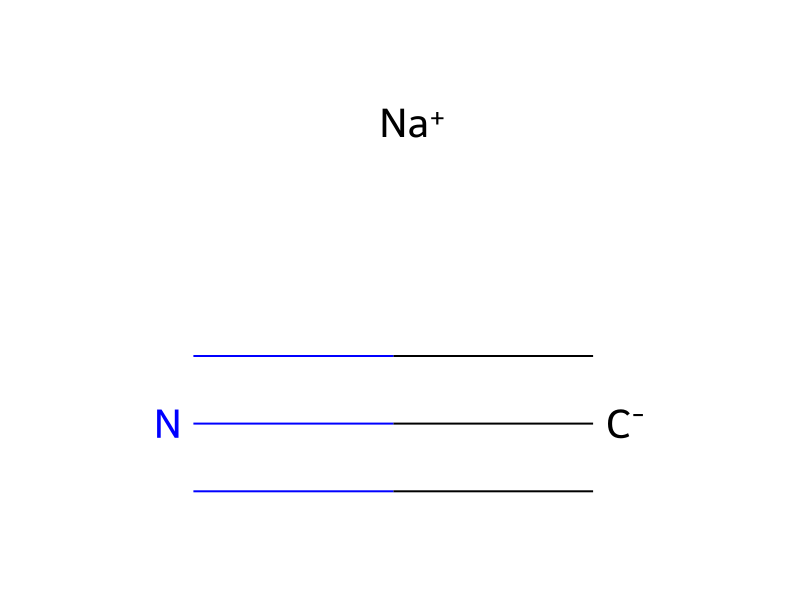
[C-:1]#[N:2].[Na+].CS(C)=O.[Cl:8][C:9]1[CH:14]=[CH:13][C:12]([C:15]2[C:24]3[C:19](=[C:20]([CH2:25]Cl)[CH:21]=[CH:22][CH:23]=3)[CH:18]=[CH:17][N:16]=2)=[CH:11][CH:10]=1.C(=O)(O)[O-].[Na+]>C(OCC)(=O)C>[Cl:8][C:9]1[CH:14]=[CH:13][C:12]([C:15]2[C:24]3[CH:23]=[CH:22][CH:21]=[C:20]([CH2:25][C:1]#[N:2])[C:19]=3[CH:18]=[CH:17][N:16]=2)=[CH:11][CH:10]=1Participants
6





Procedure
To a mixture of 5.0 g of sodium cyanide and 120 ml of dimethylsulfoxide was added 11.7 g of 1-(4-chlorophenyl)-5-chloromethylisoquinoline little by little. The mixture was stirred at room temperature for 2 hours, and poured into a mixture of ethyl acetate and 1% sodium bicarbonate aqueous solution. The organic layer was separated, washed with a saturated aqueous solution of sodium chloride, and dried. The solvent was distilled off. Recrystallization of the residue from dichloromethane-hexane afforded 1-(4-chlorophenyl)isoquinoline-5-acetonitrile as slightly yellow prisms having a melting point of 131.5° to 132.5° C.
Workup
- customThe organic layer was separated
- washwashed with a saturated aqueous solution of sodium chloride
- customdried
- distillationThe solvent was distilled off
- customRecrystallization of the residue from dichloromethane-hexane
Sources & evidence
- ORD record
- ord-9fb105ac606b4961a3d60fccdf93c711
- Source dataset
- uspto-grants-1982_06
- Patent number
- US04337256
Reaction notes
Loading…