4-Chlorophenol → 1-Chloro-4-(3-chloropropoxy)benzene
Reaction equation

[Cl:1][C:2]1[CH:7]=[CH:6][C:5]([OH:8])=[CH:4][CH:3]=1.[OH-].[Na+].Br[CH2:12][CH2:13][CH2:14][Cl:15].[Na+].[Br-]>O>[Cl:15][CH2:14][CH2:13][CH2:12][O:8][C:5]1[CH:6]=[CH:7][C:2]([Cl:1])=[CH:3][CH:4]=1Participants
6
Reactant 4
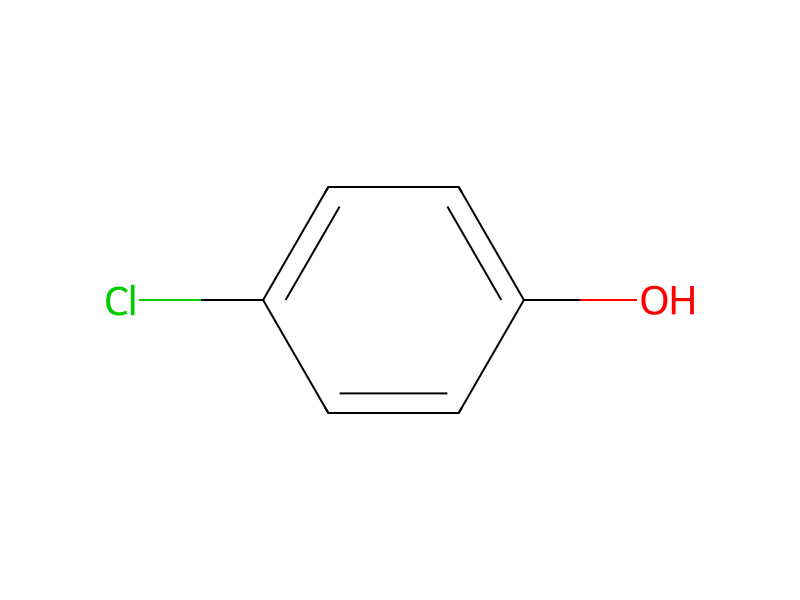



Product 1

Reagents, catalysts & solvents 1

Conditions
- Temperature
- 100 °C
Procedure
A 1 L flask provided with a stirrer was charged with 128.6 g (1.0 mol) of p-chlorophenol (available from Tokyo Chemical Industry Co., Ltd.), 52.0 g (1.3 mols) of sodium hydroxide (available from Wako Pure Chemical Industries Ltd.), 188.9 g (1.2 mols) of 1-bromo-3-chloropropane (available from Tokyo Chemical Industry Co., Ltd.) and 300 g of water. The content was maintained at 100° C. for 6 hours. Then the reaction liquid was cooled to room temperature, and deposited NaBr, produced by side reaction, was filtered off. The organic phase was separated and subjected to distillation under reduced pressure to give 179.2 g of the target p-(3-chloropropoxy)chlorobenzene (yield: 83%, purity: 95%).
Workup
- customA 1 L flask provided with a stirrer
- customThen the reaction liquid
- temperaturewas cooled to room temperature
- customproduced by side reaction
- filtrationwas filtered off
- customThe organic phase was separated
- distillationsubjected to distillation under reduced pressure
Sources & evidence
- ORD record
- ord-3c529b40a634418792e0de28a64dcf9f
- Source dataset
- uspto-grants-2010_10
- Patent number
- US07816475B2
Reaction notes
Loading…