Sodium Thiosulfate → 2-Naphthaleneacetaldehyde
Reaction equation

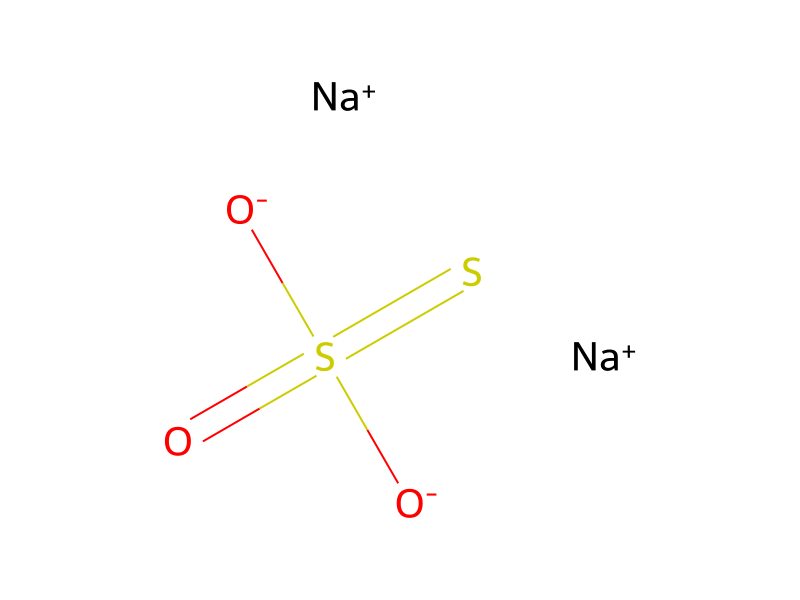
[OH:1][CH2:2][CH2:3][C:4]1[CH:13]=[CH:12][C:11]2[C:6](=[CH:7][CH:8]=[CH:9][CH:10]=2)[CH:5]=1.CC(OI1(OC(C)=O)(OC(C)=O)OC(=O)C2C=CC=CC1=2)=O.S([O-])([O-])(=O)=S.[Na+].[Na+]>ClCCl.C(=O)(O)[O-].[Na+]>[CH:5]1[C:6]2[C:11](=[CH:10][CH:9]=[CH:8][CH:7]=2)[CH:12]=[CH:13][C:4]=1[CH2:3][CH:2]=[O:1]Participants
6
Reactant 3


Product 1

Reagents, catalysts & solvents 2


Conditions
- Temperature
- 0 °C
Procedure
To a stirred solution of 2-(2-hydroxyethyl)naphthalene (50 mmol, 8.60 g) in dichloromethane (400 ml) at 0° C. was added Dess-Martin periodinate (50 mmol, 21.2 g) [J. Org. Chem. 48 4155 (1983)] in one portion. The solution was stirred at 0° C. for 10 mintes and at room temperature for 45 minutes. The reaction mixture was diluted with dichloromethane (400 ml) and sodium bicarbonate (1.0 L) containing sodium thiosulfate (55 g). The mixture was shaken for five minutes and the layers separated. The aqueous phase was extracted with dichloromethane (800 ml) and the combined organic solutions were washed with saturated sodium bicarbonate (800 ml), dried over sodium sulfate and concentrated in vacuo to provide naphthalen-2-ylacetaldehyde.
Workup
- stirringThe mixture was shaken for five minutes
- customthe layers separated
- extractionThe aqueous phase was extracted with dichloromethane (800 ml)
- washthe combined organic solutions were washed with saturated sodium bicarbonate (800 ml)
- dry with materialdried over sodium sulfate
- concentrationconcentrated in vacuo
Sources & evidence
- ORD record
- ord-2feb31ea85b149459d7ea417e4cca3aa
- Source dataset
- uspto-grants-1990_03
- Patent number
- US04910019
Reaction notes
Loading…